We have collected more than 100 brand new call girls number and added it to a pdf for easy sharing.
To download 100+ Dhakaia Magi's number, complete the captcha and download it.

Download now


Loading Captcha...

If it doesn't load, please disable Adblock!


Showing posts with label Religion. Show all posts

Why creatures rebel against the Omnipotent Creator

Why doesn’t Satan throw in the towel? He’s a seraph, so he must know better than any other sort of creature ever could that God is doomed to crush him, and that he himself is doomed to fail. Why does he then keep roaming the world seeking the ruin of souls? Why doesn’t he save himself the trouble?

When Lucifer turns from God, he ipso facto turns from Reality, and from Truth. From that moment he is incapable of apprehending the fullness of Truth. This means that he cannot apprehend God as properly God. He cannot see God for who he really is. He can see God, to be sure, and can remember his own prelapsarian life. But he can interpret his memories of perfect virtue and his present experiences of God only under the aspect of his turn from Truth; which is to say, only under the aspect of a purblind, partial, distorted image of Reality. It is a flat image, that has lost the dimension of ultimacy – of God’s eternity, omnipotence, omniscience, ubiquity, and so forth. It no longer exists for him; it is to him a meaningless notion, a nullity. Satan sees that God is powerful, but does not understand what it means that God is omnipotent.

He therefore cannot believe that God – God properly so called, the God of whom the Philosophers, Israel, the Church and her prophets, apostles, saints and mystics all speak – actually exists. Satan simply, honestly does not see that he has a King. He sees God, but does not register the fact of the righteousness of God’s reign. He sees God as a tyrant, no greater in principle than he is, whom he could usurp, and would.
He is an atheist.

So is he a nominalist, and a nihilist. For, having turned from Reality, he has turned to nothingness. All that remains to him then is himself, looking out upon nothing. And he takes this solitude as basic to being. So is he an unwitting solipsist. And so sophistical a solipsist is he, that no contravening item can penetrate to his awareness.
He is, in short, deluded – and cannot understand that this is so.

You can’t turn to a Light that you can’t see (except by accident). So Satan can’t turn back to God. He sees nothing there to turn back to. He and his minions literally can’t see God, or the Good. They see only perversions of the Good, and of God; and it is to these perversions that they adhere, and abhere. They seek the Less than Optimal, mistaking it for the Optimal; they are idolaters. Presumably they are honest errants, honest idolaters. They cannot turn from their moral course, because they cannot see that there is any other sort of course open to them. As with the Truth and the Light, the Way for them is nonexistent.
Satan cannot turn back.

In this he is unlike men. Men inherit a turn from Reality as Original Sin, to be sure; this is the Body of Death. That Body obscures Reality, so that men see it only as through a glass, and darkly. Even to apprehend its existence, they need experience or education or training. This they seek by their nature, which was first made (like those of all creatures) for and toward God. But men are far less scient than angels, and have a much harder time attaining certainty about anything. It behooves them if they want to live then to be ever doubtful, to fret and worry always whether they have got things wrong after all. Men are so constituted in their biological essences as never to be able to choose irrevocably while they yet live. All their dogmas are held provisionally, and are subject to change depending on further developments. Men can therefore amend their policies, and do. They can at every moment of their lives turn from one path to another, diametrically opposite path.

This turn is presumably available to Lucifer too, ontologically; it is prevented to him only epistemologically. His phenomenal life is devoid of enchantment; for him, there is no musical aspect to being, nor for that matter any ultimately rational aspect to it, no Rational Ultimate. Reality is for him essentially unintelligible; for in turning from Reality and Truth, you turn from all that is intelligible toward what is not; toward chaos and non-being. Turning from the Good himself, and from Reality per se, you turn effectually away from moral realism, and become a radical moral skeptic. You turn finally also from causal power, ergo from actuality: for the efficacious use of power depends upon its apt application to Reality as it is in itself. So, Satan is dwindling toward the zero of action, toward his tomb of icy immobility.

Satan does not throw in the towel, then, because his certainty in the competence of his science blinds him both to its incompetence and to the fact of his error. Being blind to the Real Good he is alive exclusively to a False Good, and seeks it. He seeks for all creatures – i.e., for his own environment of actual entities, his own world of which he is the ruler – a radical freedom from what he sees as the unjust strictures of fantastic religious cults whose object is strictly illusory, and whose acts and works are therefore insane and evil.
It goes like this, then:
  1. The comprehension of seraphic science leads to overconfidence – to Pride. Thanks to his comprehension, the seraph has no true reason to feel any doubt in his own powers of apprehension or knowledge or understanding.
  2. But even comprehensive science cannot see what is not – it cannot see or a fortioriconcretely or vividly understand evil or disorder ex ante – cannot see what it is like to be wicked, as compared to what it is like to be virtuous. Ex ante, an evil option will seem to it morally indifferent, and will seem to pose no danger.
  3. The innocent seraphic conscience is therefore ignorant of evil. Only ex post can any creaturely agent fully understand the character of what it has done.
  4. But even having Fallen, the seraph never does fully understand what he has done as evil. He never can. He is stuck in his ignorance. Talk about a clever silly!
  5. Having Fallen, the seraph is not disabused of his Pride, for he is ignorant thereof. The Prideful seraph has no idea that he is ignorant of anything; his Pride seems therefore to him, honestly, quite apt, as also do all his acts. He has no notion that he is Proud. He does not know that he does not know what he does not know.
  6. The Truth, then, the Good, the Beautiful, the Real, and the Potent are to the Fallen seraph utterly invisible. He sees only their perversions, and mistakes them for the genuine articles.
  7. Even after his Fall, then, the seraph does not apprehend it as such. It seems to him rather only a natural and unremarkable development of his life as it first came to him.
  8. I.e., the Fallen seraph does not understand evil as evil. It looks OK to him. He does not mind his suffering, because he knows no better. His life is normal to him. To what other might he compare it?
So only the seraphim who have not Fallen, and who can observe the squalid lives of their adversaries, can understand evil concretely. Because it is a deprivation of good, evil can be understood only from the perspective of that good.

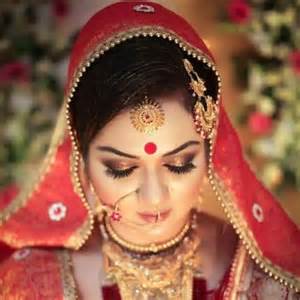
Why do some Indian women have a red dot on their forehead?: Bindi (decoration)

The red dot is called a bindi in Hindu Culture

The red dot is called a bindi. It is a form of body decoration. Culturally, hindus attach a lot of importance to this ornamental mark and call it by various names - pottu, bindi, tikka, tilakam and sindoor. There are various theories on why it is important and I will share a few here.

The 'Hot' Spot

The area between the eyebrows on the forehead is the spot of 'agna' chakra. In yogic science, this spot is considered as one of immense power, often called as the third eye. It signifies a point of awakening and is usually activated while pursing spiritual sciences. In Chinese acupressure sciences, this point is considered to be a converging point for nerves and a massage is believed to relieve headaches. Ayurveda also believes massaging this spot will relieve stress and insomnia.

The 'Magic' Ingredient

Traditionally kumkum ( a mixture of turmeric and lime) or chandan (sandalwood) was used to mark a bindi. Kumkum is hygroscopic in nature and can greatly assist to remove excess water from one's head. Tumeric's anti-bacterial properties are helpful too. Further, the colour red is believed to aid spiritually. Chandan or sandalwood is renowned for its 'cooling' properties. For a hot tropic country, application of chandan on forehead ( a nerve centre) helps to cool one's entire system.

On a religious note, the color red symoblises 'shakti', the goddess of strength. A kumkum is marked on girls after marriage denoting strength and wishing for peace.


For Married women its called Sindoor

It is called Sindoor (main ingredient is generally vermillion which is a sulfide of mercury) and worn by generally married Hindu women (some religious men use it too, but not as a dot but as a big stretched out thumb print on the forehead). They also put a line of this powder along the parting of hair on their head. Both of these traditionally signify the marital status of the woman/girl - kind of like wedding rings/band in the western world. It signifies love, fertility, prosperity etc. for the married woman. According to some beliefs of Hinduism the forhead/middle of the two brows is the seat of wisdom/one of the six chakras/Brahma/Spiritual power (or the all seeing third eye). So traditionally the dot is used to store the energy of the power/signify and remind us of its existence.

However, you may also be talking about the coloured (any colour possible) dot made of suede or other material with a glue/sticky back and worn by women all over india irrespective of (at least as far as I know) religious following or marital status. That is called a 'bindi', derived and minisculized from 'bindoo' - which is the Sanskrita word for 'dot'. This is just a cosmetics and beauty enhancer.


Women and men have acupressure point in their fore head which when pressed by the ring finger of right hand (I,e when wearing a bindhi or kum kum) the acupoint is pressed and that nerve activates the brain. 
 

One can control ones mind by concentrating over this point.  That's why to avoid this kind of attraction women put bindhi which will cover the point to avoid such happenings.  There will be a controversy based on religion in this kind of questions. Hindus put bindhi but what about Muslims ?? Yes they also protect themselves by closing their entire face while wearing burkas. But now a days hindus girls also avoid putting bindhi. Its becoming a fashion. They don't realise the science behind this. 
 

Notice the position of Ajna chakra. That is where bindis have to be rightfully placed.


Chakras are basically energy points that correspond to major points in the physical body (in relation to nerves). They are also believed to be centres of cosmic energy connection of the body. This principle forms the basic for many traditional healing methods like Pranic healing, Reiki and mainly yoga.

Moving towards the question in specific, ajna chakra is the 'seat of concealed wisdom' (as mentioned in Bindi (decoration)). In other words it represents the subconscious mind of individuals and the various thought processes. Negative energy in the form of negative thoughts and black magic enters the body through this chakra. When you place a bindi, you block the negative energy from entering the body.

Traditional bindis are made of kumkum which is basically turmeric and saffron. Turmeric has many many uses in culinary and health sciences and also cosmetics. Similar to how it scientifically blocks UV rays, turmeric in kumkum blocks the negative energy, which i mentioned earlier. Saffron is also generally used for cosmetic purposes.

Also red bindis are said to impart certain beauty to women when they wear it.

I realize that chakras, on which my explanation is based, have not been scientifically proven. I can just say that the previously mentioned techniques like Yoga, Pranic healing, Reiki,etc have proven results and they have originated in various parts of the world, not just India AND that chakras are not just figments of Hindu religion.
 

Ramadan health FAQs

Here are some frequently asked health questions about fasting during the holy month of Ramadan.
These answers have been put together by medical experts and Islamic scholars and researchers.
Should a person with diabetes fast?
People who have their diabetes under control, either by their diet or using tablets, may fast. However, their GP may require them to change their medication to help them take tablets outside fasting times. Those who need insulin to control their diabetes should not fast.
I get severe migraines when I don't eat and they get worse when I fast. Should I fast?
People with uncontrolled migraines should not fast. However, managing your migraines is possible with the right medicine and certain lifestyle changes. Ask your GP for further advice on controlling your migraines.
Should a person with high or low blood pressure fast?
People with well-controlled high blood pressure may fast. Their GP may require a change to their medicine to help them take tablets outside fasting times. Someone with low blood pressure who is otherwise healthy may fast. They must ensure they drink enough fluid and have enough salt.
Is fasting harmful when a woman is expecting a baby? Must pregnant women fast?
There's medical evidence to show that fasting in pregnancy is not a good idea. If a pregnant woman feels strong and healthy enough to fast, especially during the early part of the pregnancy, she may do so. If she doesn't feel well enough to fast, Islamic law gives her clear permission not to fast, and to make up the missed fasts later. If she is unable to do this, she must perform fidyah (a method of compensation for a missed act of worship).
Is Ramadan a good time to quit smoking?
Yes. Smoking is bad for your health and Ramadan is a great opportunity to change unhealthy habits, including smoking. Find out more about stopping smoking.
From what age can children fast safely?
Children are required to fast upon reaching puberty. It isn't harmful. Fasting before this age is tolerated differently depending on the attitude of the parents and the child’s general health and nutrition.
Fasting for children under the age of seven or eight isn't advisable. It's a good idea to make children aware of what fasting involves and to practise fasting for a few hours at a time.
Can I use an asthma inhaler during Ramadan?
Muslim experts have differing opinions on this issue. Some say that using an asthma inhaler isn't the same as eating or drinking, and is therefore permitted during fasting. In their view, people with asthma can fast and use their inhalers whenever they need to.
However, other scholars say that the inhaler provides small amounts of liquid medicine to the lungs, so it breaks the fast. They say that people with poor control of their asthma must not fast until good control is achieved. Some people with asthma may opt for longer-acting inhalers so that they can fast. See your GP for further advice.
Can I swim during fasting?
Yes, but do not drink the water. A bath or shower, or swimming, has no effect on the fast. However, no water should be swallowed during any of these activities as that would break the fast.
Can a person fast if they are getting a blood transfusion in hospital?
No. A person receiving a blood transfusion is advised not to fast on medical grounds. They may fast on the days when no transfusions are required.
I am on regular medication. Can I still fast?
If the medicine needs to be taken during fasting, do not fast. If this medication is required as treatment for a short illness, you can compensate for missed fasts by fasting on other days when you are well.
If you are on long-term medication then you could talk to your GP about whether you could change your medication, so that you can take it outside the time of the fast.
If your disease is unstable, or poorly controlled, do not fast. Those who are unable to carry out the missed fasts later, due to the long-term use of medication, should do fidyah.
Does a breastfeeding woman have to fast?
No. Islamic law says a breastfeeding mother does not have to fast. Missed fasts must be compensated for by fasting at a later date, or fidyah, once breastfeeding has stopped.
Can a Muslim patient take tablets, have injections or use patches while fasting?
Taking tablets breaks the fast. However, injections, patches, eardrops and eyedrops do not break the fast as they are not considered to be food and drink (though there are differences of opinion among Muslim scholars on these issues). Islamic law says sick people should not fast.
Could dehydration become so bad that you have to break the fast?
Yes. You could become very dehydrated if you do not drink enough water before the fast. Poor hydration can be made worse by weather conditions, and even everyday activities such as walking to work or housework.
If you produce very little or no urine, feel disoriented and confused, or faint due to dehydration, you must stop fasting and have a drink of water or other fluid. Islam doesn't require you to harm yourself in fulfilling the fast. If a fast is broken, it will need to be compensated for by fasting at a later date.
Can I fast while I have dialysis?
People on peritoneal dialysis must not fast and should perform fidyah. Haemodialysis is performed about three times a week and causes significant shifts of fluids and salts within the body. Such patients must not fast and should perform fidyah.
asting is a symbolic act whose meaning becomes gradually apparent through experience. The meaning embodied in a ritual is always unveiled when one immerses himself or herself in the act itself. This does not mean that fasting is not open to intellectual delineation, but rather any intellectual delineation either presupposes or predicts a meaning that can best become apparent through performing the symbolic act itself.
- See more at: http://www.islamicity.com/Articles/articles.asp?ref=IC0510-2816#sthash.X29oLgSv.dpuf
Ramadan is the month of fasting for Muslims the world over. Muslims refrain from eating, drinking, and sexual intercourse from dawn to dusk for the duration of Ramadan. For some, fasting may appear as a form of deprivation and of bodily exertion. On one level, abstaining from sensual needs and pleasures is indeed a physical experience. But those who stop at the physical aspects of fasting miss the essence of Ramadan and its purpose.

Fasting the month of Ramadan is one of the five pillars of Islam. These are the foundation upon which the entire structure of Islam is built. These consist of the declaration of faith, prayer, fasting Ramadan, paying of Zakah [the annual charity payment], and performing the pilgrimage to Makkah, known as hajj. Three of the five pilars of Islam are rituals, that is, prescribed religious acts whose rationale is not immediately available for understanding. These are prayer, fasting, and hajj. Muslims are required to do them because they are part of their religious duties, that is, they are part of their covenant with God.

As a ritual, fasting is a symbolic act whose meaning becomes gradually apparent through experience. The meaning embodied in a ritual is always unveiled when one immerses himself or herself in the act itself. This does not mean that fasting is not open to intellectual delineation, but rather any intellectual delineation either presupposes or predicts a meaning that can best become apparent through performing the symbolic act itself.

Spiritual Development

The essence of fasting Ramadan and its goal is summed in the Qur'an in one word: taqwa. "O you who believe! Fasting is prescribed to you as it was prescribed to those before you, that you may attain taqwa." (Qur'an 2:183)

But what is taqwa? And how does it relate to the physical act of fasting?

Taqwa is a recurring theme in the Qur'an and a paramount Qur'anic value. Taqwa is both an attitude and a process. It is the proper attitude of the human toward the divine that denotes love, devotion, and fear. Love to the source of good and beauty that make life worth living; devotion to God's boundless wisdom and majesty; and fear of misunderstanding the divine intent or failing in maintaining the appropriate posture and relationship.

The attitude of taqwa cannot and does not stay in the confines of the human spirit, but is ultimately revealed in expression and action. The attitude of taqwa is ultimately revealed in, and in turn reveals, the true character it nurtures: the commitment to the sublime values stressed by divine revelations of courage, generosity, compassion, honesty, steadfastness, and cooperation in pursuing what is right and true.

Taqwa is equally the process by which the believers internalize the sublime values of revelation and develop their character. Thus the Qur'an reminds the believers that they should not reduce religious practices to a set of blind rituals, of religiously ordained procedures performed at the level of physical movement, and that they should always be mindful that religious practices, like praying and fasting, ultimately aim at bringing about moral and spiritual uplifting: "It is not righteousness that you turn your faces towards East or West: But it is righteousness to believe in God and the Last day, and the Angels, the Book, and the Messengers; to give out of the things you hold dear to your kin, the orphans, the needy, the wayfarer, the one who asks, and to free the slave. And to be steadfast in prayer and to give for charity. To fulfill the covenants you have made, and to be firm and patient in times of pain, adversity, and panic. Such are the people of truth, and such are the God-conscious." (Qur'an 2:177) 
- See more at: http://www.islamicity.com/Articles/articles.asp?ref=IC0510-2816#sthash.X29oLgSv.dpuf
Ramadan is the month of fasting for Muslims the world over. Muslims refrain from eating, drinking, and sexual intercourse from dawn to dusk for the duration of Ramadan. For some, fasting may appear as a form of deprivation and of bodily exertion. On one level, abstaining from sensual needs and pleasures is indeed a physical experience. But those who stop at the physical aspects of fasting miss the essence of Ramadan and its purpose.

Fasting the month of Ramadan is one of the five pillars of Islam. These are the foundation upon which the entire structure of Islam is built. These consist of the declaration of faith, prayer, fasting Ramadan, paying of Zakah [the annual charity payment], and performing the pilgrimage to Makkah, known as hajj. Three of the five pilars of Islam are rituals, that is, prescribed religious acts whose rationale is not immediately available for understanding. These are prayer, fasting, and hajj. Muslims are required to do them because they are part of their religious duties, that is, they are part of their covenant with God.

As a ritual, fasting is a symbolic act whose meaning becomes gradually apparent through experience. The meaning embodied in a ritual is always unveiled when one immerses himself or herself in the act itself. This does not mean that fasting is not open to intellectual delineation, but rather any intellectual delineation either presupposes or predicts a meaning that can best become apparent through performing the symbolic act itself.

Spiritual Development

The essence of fasting Ramadan and its goal is summed in the Qur'an in one word: taqwa. "O you who believe! Fasting is prescribed to you as it was prescribed to those before you, that you may attain taqwa." (Qur'an 2:183)

But what is taqwa? And how does it relate to the physical act of fasting?

Taqwa is a recurring theme in the Qur'an and a paramount Qur'anic value. Taqwa is both an attitude and a process. It is the proper attitude of the human toward the divine that denotes love, devotion, and fear. Love to the source of good and beauty that make life worth living; devotion to God's boundless wisdom and majesty; and fear of misunderstanding the divine intent or failing in maintaining the appropriate posture and relationship.

The attitude of taqwa cannot and does not stay in the confines of the human spirit, but is ultimately revealed in expression and action. The attitude of taqwa is ultimately revealed in, and in turn reveals, the true character it nurtures: the commitment to the sublime values stressed by divine revelations of courage, generosity, compassion, honesty, steadfastness, and cooperation in pursuing what is right and true.

Taqwa is equally the process by which the believers internalize the sublime values of revelation and develop their character. Thus the Qur'an reminds the believers that they should not reduce religious practices to a set of blind rituals, of religiously ordained procedures performed at the level of physical movement, and that they should always be mindful that religious practices, like praying and fasting, ultimately aim at bringing about moral and spiritual uplifting: "It is not righteousness that you turn your faces towards East or West: But it is righteousness to believe in God and the Last day, and the Angels, the Book, and the Messengers; to give out of the things you hold dear to your kin, the orphans, the needy, the wayfarer, the one who asks, and to free the slave. And to be steadfast in prayer and to give for charity. To fulfill the covenants you have made, and to be firm and patient in times of pain, adversity, and panic. Such are the people of truth, and such are the God-conscious." (Qur'an 2:177) 
- See more at: http://www.islamicity.com/Articles/articles.asp?ref=IC0510-2816#sthash.X29oLgSv.dpuf
Ramadan is the month of fasting for Muslims the world over. Muslims refrain from eating, drinking, and sexual intercourse from dawn to dusk for the duration of Ramadan. For some, fasting may appear as a form of deprivation and of bodily exertion. On one level, abstaining from sensual needs and pleasures is indeed a physical experience. But those who stop at the physical aspects of fasting miss the essence of Ramadan and its purpose.

Fasting the month of Ramadan is one of the five pillars of Islam. These are the foundation upon which the entire structure of Islam is built. These consist of the declaration of faith, prayer, fasting Ramadan, paying of Zakah [the annual charity payment], and performing the pilgrimage to Makkah, known as hajj. Three of the five pilars of Islam are rituals, that is, prescribed religious acts whose rationale is not immediately available for understanding. These are prayer, fasting, and hajj. Muslims are required to do them because they are part of their religious duties, that is, they are part of their covenant with God.

As a ritual, fasting is a symbolic act whose meaning becomes gradually apparent through experience. The meaning embodied in a ritual is always unveiled when one immerses himself or herself in the act itself. This does not mean that fasting is not open to intellectual delineation, but rather any intellectual delineation either presupposes or predicts a meaning that can best become apparent through performing the symbolic act itself.

Spiritual Development

The essence of fasting Ramadan and its goal is summed in the Qur'an in one word: taqwa. "O you who believe! Fasting is prescribed to you as it was prescribed to those before you, that you may attain taqwa." (Qur'an 2:183)

But what is taqwa? And how does it relate to the physical act of fasting?

Taqwa is a recurring theme in the Qur'an and a paramount Qur'anic value. Taqwa is both an attitude and a process. It is the proper attitude of the human toward the divine that denotes love, devotion, and fear. Love to the source of good and beauty that make life worth living; devotion to God's boundless wisdom and majesty; and fear of misunderstanding the divine intent or failing in maintaining the appropriate posture and relationship.

The attitude of taqwa cannot and does not stay in the confines of the human spirit, but is ultimately revealed in expression and action. The attitude of taqwa is ultimately revealed in, and in turn reveals, the true character it nurtures: the commitment to the sublime values stressed by divine revelations of courage, generosity, compassion, honesty, steadfastness, and cooperation in pursuing what is right and true.

Taqwa is equally the process by which the believers internalize the sublime values of revelation and develop their character. Thus the Qur'an reminds the believers that they should not reduce religious practices to a set of blind rituals, of religiously ordained procedures performed at the level of physical movement, and that they should always be mindful that religious practices, like praying and fasting, ultimately aim at bringing about moral and spiritual uplifting: "It is not righteousness that you turn your faces towards East or West: But it is righteousness to believe in God and the Last day, and the Angels, the Book, and the Messengers; to give out of the things you hold dear to your kin, the orphans, the needy, the wayfarer, the one who asks, and to free the slave. And to be steadfast in prayer and to give for charity. To fulfill the covenants you have made, and to be firm and patient in times of pain, adversity, and panic. Such are the people of truth, and such are the God-conscious." (Qur'an 2:177) 
- See more at: http://www.islamicity.com/Articles/articles.asp?ref=IC0510-2816#sthash.X29oLgSv.dpuf
Ramadan is the month of fasting for Muslims the world over. Muslims refrain from eating, drinking, and sexual intercourse from dawn to dusk for the duration of Ramadan. For some, fasting may appear as a form of deprivation and of bodily exertion. On one level, abstaining from sensual needs and pleasures is indeed a physical experience. But those who stop at the physical aspects of fasting miss the essence of Ramadan and its purpose.

Fasting the month of Ramadan is one of the five pillars of Islam. These are the foundation upon which the entire structure of Islam is built. These consist of the declaration of faith, prayer, fasting Ramadan, paying of Zakah [the annual charity payment], and performing the pilgrimage to Makkah, known as hajj. Three of the five pilars of Islam are rituals, that is, prescribed religious acts whose rationale is not immediately available for understanding. These are prayer, fasting, and hajj. Muslims are required to do them because they are part of their religious duties, that is, they are part of their covenant with God.

As a ritual, fasting is a symbolic act whose meaning becomes gradually apparent through experience. The meaning embodied in a ritual is always unveiled when one immerses himself or herself in the act itself. This does not mean that fasting is not open to intellectual delineation, but rather any intellectual delineation either presupposes or predicts a meaning that can best become apparent through performing the symbolic act itself.

Spiritual Development

The essence of fasting Ramadan and its goal is summed in the Qur'an in one word: taqwa. "O you who believe! Fasting is prescribed to you as it was prescribed to those before you, that you may attain taqwa." (Qur'an 2:183)

But what is taqwa? And how does it relate to the physical act of fasting?

Taqwa is a recurring theme in the Qur'an and a paramount Qur'anic value. Taqwa is both an attitude and a process. It is the proper attitude of the human toward the divine that denotes love, devotion, and fear. Love to the source of good and beauty that make life worth living; devotion to God's boundless wisdom and majesty; and fear of misunderstanding the divine intent or failing in maintaining the appropriate posture and relationship.

The attitude of taqwa cannot and does not stay in the confines of the human spirit, but is ultimately revealed in expression and action. The attitude of taqwa is ultimately revealed in, and in turn reveals, the true character it nurtures: the commitment to the sublime values stressed by divine revelations of courage, generosity, compassion, honesty, steadfastness, and cooperation in pursuing what is right and true.

Taqwa is equally the process by which the believers internalize the sublime values of revelation and develop their character. Thus the Qur'an reminds the believers that they should not reduce religious practices to a set of blind rituals, of religiously ordained procedures performed at the level of physical movement, and that they should always be mindful that religious practices, like praying and fasting, ultimately aim at bringing about moral and spiritual uplifting: "It is not righteousness that you turn your faces towards East or West: But it is righteousness to believe in God and the Last day, and the Angels, the Book, and the Messengers; to give out of the things you hold dear to your kin, the orphans, the needy, the wayfarer, the one who asks, and to free the slave. And to be steadfast in prayer and to give for charity. To fulfill the covenants you have made, and to be firm and patient in times of pain, adversity, and panic. Such are the people of truth, and such are the God-conscious." (Qur'an 2:177) 
- See more at: http://www.islamicity.com/Articles/articles.asp?ref=IC0510-2816#sthash.X29oLgSv.dpuf

What is Ramadan?

Ramadan is the ninth month of the Islamic calendar. It is a time of fasting for the Islamic people. Each day during this month, Muslims all over the world abstain from eating, drinking, smoking, as well as participating in anything that is ill-natured or excessive; from dawn until the sun sets. Fasting is intended to educate the Muslim in spirituality, humility and patience. It is a time to cleanse the soul, focus attention on God, and put into practice selflessness. Ramadan is a time for Muslims to fast for the sake of God and to put forward more prayer than is customary.
Fasting is one of the Five Pillars of the Islam religion, and one of the main types of Islamic worship. Restraint from everyday enjoyment and curbing wicked intentions and cravings are considered as an act of compliance and obedience to God, as well as amends for sins, faults, and mistakes. Ramadan is also called Ramazan. During Ramadan, Muslims request forgiveness for sins in the past, pray for direction and assistance in abstaining from everyday troubles, and endeavor to cleanse themselves through self-control and great acts of faith.
In comparison to the solar calendar, the Ramadan dates differ, moving forward approximately ten days every year due to the fact that it is a moving holiday which is dependent on the moon. Ramadan was the month in which the initial verses of the Qur'an were said to be shown to Muhammad, the Islamic Prophet.
The name "Ramadan" had been the name of the ninth month in Arabian tradition prior to the onset of Islam; the word itself originated from an Arabic root “rmd”, in words like "ramida" or "ar-ramad” which means severe heat, burnt ground as well as shortness of provisions. Individuals say it is named Ramadan because it burns out the sins with good deeds, as the sun scorches the ground. In the Qu'ran, God declares that "fasting has been written down upon you, as it was upon those before you". In accordance with the first hadith, this is in reference to the Jewish custom of fasting on Yom Kippur.
The lunar cycle determines the Islamic calendar, therefore the month of Ramadan, which is the ninth month commences with a mixture of the sighting of the new moon as well as astronomical calculations. The precise time of Ramadan will at times vary from place to place because some depend a great deal on moon sightings, while others rely on science. An Imam which is a Muslim holy man will make known the correct time of Ramadan right before it begins. The fasting phase finishes upon the sighting of the next new moon, which take place after 29 or 30 days.
Ramadan conveys an extraordinary sense of emotional enthusiasm and religious eagerness among Muslims of all ages. Even though fasting is compulsory for adults alone, children as young as eight readily watch fasting with their elders. Children look forward to the thrill of the moon sighting and eating unique meals with their relatives. Adults are grateful for the chance to double their rewards from God and ask for pardon for their past sins. Ramadan highlights Muslim brotherhood and customs and brings about a special feeling of closeness.
nibh dapibus neque, eu molestie eros odio vel sapien. Nullam rhoncus. Fusce elementum ipsum auctor nisl. In euismod. Morbi metus erat, fringilla vitae, feugiat sed, aliqueapien. Aliquam tellus. Praesent sollicitudin. Morbi leo magna, tempor nec, iaculis sed, ultrice, loremIn convallis nulla eg lacus. Curabitur

Ramadan (calendar month)

Ramadan (Arabic:; رمضان) is the ninth month of the Islamic calendar, and the month in which Muslims believe the Quran was revealed.
Fasting during the month of Ramadan is one of the Five Pillars of Islam. The month is spent by Muslims fasting during the daylight hours from dawn to sunset. Muslims believe that the Quran was sent down to the lowest heaven during this month, thus being prepared for gradual revelation by Jibraeel (Gabriel) to the Islamic prophet Muhammad. Furthermore, Muhammad told his followers that the gates of Heaven would be open all the month and the gates of Hell (Jahannam) would be closed. The first three days of the next month, Shawwal, is spent in celebrations and is observed as the "Festival of Breaking Fast" or Eid al-Fitr

The Islamic calendar is a lunar calendar, and months begin when the first crescent of a new moon is sighted. Since the Islamic lunar calendar year is 11 to 12 days shorter than the solar year and contains no intercalation, Ramadan migrates throughout the seasons. The Islamic day starts after sunset. The actual and estimated start and end dates for Ramadan in 2003–2017 were and are as follows:
CE / AD AH First day Last day
2003 1424 26 October 24 November
2004 1425 15 October 13 November
2005 1426 4 October 2 November
2006 1427 24 September 23 October
2007 1428 13 September 12 October
2008 1429 1 September 30 September
2009 1430 22 August 19 September
2010 1431 11 August 9 September
2011 1432 1 August 29 August
2012 1433 20 July 18 August
2013 1434 10 July 7 August
2014 1435 28 June 27 July
2015 1436 18 June 16 July
2016 1437 6 June 5 July
2017 1438 27 May 25 June
All of the Ramadan dates between 2014 and 2017 are estimates
Many Muslims insist on the local physical sighting of the moon to mark the beginning of Ramadan, but others use the calculated time of the new moon or the Saudi Arabian declaration to determine the start of the month. Since the new moon is not in the same state at the same time globally, the beginning and ending dates of Ramadan depend on what lunar sightings are received in each respective location. As a result, Ramadan dates vary in different countries, but usually only by a day. This is due to the cycle of the moon. The moon travels the same path all year round and when the moon is seen in the east, it is then seen traveling towards the west. All the countries around the world see the moon within a 24 hour period once spotted by one country in the east.
Each year, Ramadan begins about eleven days earlier than in the previous year. Astronomical projections that approximate the start of Ramadan are available. It takes about 33 years and five days for Ramadan to complete a twelve month move across the yearly calendar. As Ramadan 28 March 1990 to Ramadan 22 March 2023.

Upgrade to ‘Z Class’ for Peace

Cause it’s getting squishy squashy at the Monk on our celebratory dinner for International Day of Peace (21 September, 2011), the cookie boy has kindly offered us his wheels pictured below as an alternative eating space that will be parked outside the Monk.
This will particularly appeal to the more casual swinger hipster cool types that are looking for the experience of how this old hippie traveled the 3 K’s (Kuta, Kathmandu. Kabul) in the 60’s. But if you are straight edged and cashed up, that’s cool too!
As this is a once only offering for people looking for a more intimate occasion, it will also come at a premium price of $100 per person. Rest assured that absolutely all the proceeds go to the Sea Shepherd Conservation Society and Edgars Mission!
Bookings of 3-4 only on a first come first served basis.
Date and Time: Wednesday 21 September, 2011 at 6pm and 8.30pm
Dinner will be fully vegan and will include the following :
Three [3] dip combo/ Moroccan Pumpkin, Mexican Red Bean and Middle Eastern Hummus served with organic corn chips and raw vegetable crudités
Rasam [soup]
Feast Plate/ Sea Shepherd Pie, Mansoor Dal, Spiced Potatoes, Royal Rice [Sela], Lijjat Pappads, Silverbeet Kitchari and Chile Jam
Raw selection of mignardises including chocolates, cookies, biscotti and macaroons
Beautiful Chai Masala
Please book online through www.monkbd.com.au/wpd as a regular payment and then email marwin@monkbd.com.au to request an upgrade.

Is There a God?

Does God exist? Here are six straight-forward reasons to believe that God is really there.
 Just once wouldn't you love for someone to simply show you the evidence for God's existence? No arm-twisting. No statements of, "You just have to believe." Well, here is an attempt to candidly offer some of the reasons which suggest that God exists.
But first consider this. If a person opposes even the possibility of there being a God, then any evidence can be rationalized or explained away. It is like if someone refuses to believe that people have walked on the moon, then no amount of information is going to change their thinking. Photographs of astronauts walking on the moon, interviews with the astronauts, moon rocks...all the evidence would be worthless, because the person has already concluded that people cannot go to the moon.
When it comes to the possibility of God's existence, the Bible says that there are people who have seen sufficient evidence, but they have suppressed the truth about God.1 On the other hand, for those who want to know God if he is there, he says, "You will seek me and find me; when you seek me with all your heart, I will be found by you."2 Before you look at the facts surrounding God's existence, ask yourself, If God does exist, would I want to know him? Here then, are some reasons to consider...

1. Does God exist? The complexity of our planet points to a deliberate Designer who not only created our universe, but sustains it today.

Many examples showing God's design could be given, possibly with no end. But here are a few:
The Earth...its size is perfect. The Earth's size and corresponding gravity holds a thin layer of mostly nitrogen and oxygen gases, only extending about 50 miles above the Earth's surface. If Earth were smaller, an atmosphere would be impossible, like the planet Mercury. If Earth were larger, its atmosphere would contain free hydrogen, like Jupiter.3 Earth is the only known planet equipped with an atmosphere of the right mixture of gases to sustain plant, animal and human life.
existence of GodThe Earth is located the right distance from the sun. Consider the temperature swings we encounter, roughly -30 degrees to +120 degrees. If the Earth were any further away from the sun, we would all freeze. Any closer and we would burn up. Even a fractional variance in the Earth's position to the sun would make life on Earth impossible. The Earth remains this perfect distance from the sun while it rotates around the sun at a speed of nearly 67,000 mph. It is also rotating on its axis, allowing the entire surface of the Earth to be properly warmed and cooled every day.
And our moon is the perfect size and distance from the Earth for its gravitational pull. The moon creates important ocean tides and movement so ocean waters do not stagnate, and yet our massive oceans are restrained from spilling over across the continents.4
Water...colorless, odorless and without taste, and yet no living thing can survive without it. Plants, animals and human beings consist mostly of water (about two-thirds of the human body is water). You'll see why the characteristics of water are uniquely suited to life:
It has an unusually high boiling point and freezing point. Water allows us to live in an environment of fluctuating temperature changes, while keeping our bodies a steady 98.6 degrees.
proof of GodWater is a universal solvent. This property of water means that thousands of chemicals, minerals and nutrients can be carried throughout our bodies and into the smallest blood vessels.5
Water is also chemically neutral. Without affecting the makeup of the substances it carries, water enables food, medicines and minerals to be absorbed and used by the body.
Water has a unique surface tension. Water in plants can therefore flow upward against gravity, bringing life-giving water and nutrients to the top of even the tallest trees.
Water freezes from the top down and floats, so fish can live in the winter.
Ninety-seven percent of the Earth's water is in the oceans. But on our Earth, there is a system designed which removes salt from the water and then distributes that water throughout the globe. Evaporation takes the ocean waters, leaving the salt, and forms clouds which are easily moved by the wind to disperse water over the land, for vegetation, animals and people. It is a system of purification and supply that sustains life on this planet, a system of recycled and reused water.6
The human brain...simultaneously processes an amazing amount of information. Your brain takes in all the colors and objects you see, the temperature around you, the pressure of your feet against the floor, the sounds around you, the dryness of your mouth, even the texture of your keyboard. Your brain holds and processes all your emotions, thoughts and memories. At the same time your brain keeps track of the ongoing functions of your body like your breathing pattern, eyelid movement, hunger and movement of the muscles in your hands.
existence of GodThe human brain processes more than a million messages a second.7 Your brain weighs the importance of all this data, filtering out the relatively unimportant. This screening function is what allows you to focus and operate effectively in your world. The brain functions differently than other organs. There is an intelligence to it, the ability to reason, to produce feelings, to dream and plan, to take action, and relate to other people.
The eye...can distinguish among seven million colors. It has automatic focusing and handles an astounding 1.5 million messages -- simultaneously.8 Evolution focuses on mutations and changes from and within existing organisms. Yet evolution alone does not fully explain the initial source of the eye or the brain -- the start of living organisms from nonliving matter.

2. Does God exist? The universe had a start - what caused it?

Scientists are convinced that our universe began with one enormous explosion of energy and light, which we now call the Big Bang. This was the singular start to everything that exists: the beginning of the universe, the start of space, and even the initial start of time itself.
Astrophysicist Robert Jastrow, a self-described agnostic, stated, "The seed of everything that has happened in the Universe was planted in that first instant; every star, every planet and every living creature in the Universe came into being as a result of events that were set in motion in the moment of the cosmic explosion...The Universe flashed into being, and we cannot find out what caused that to happen."9
Steven Weinberg, a Nobel laureate in Physics, said at the moment of this explosion, "the universe was about a hundred thousands million degrees Centigrade...and the universe was filled with light."10
The universe has not always existed. It had a start...what caused that? Scientists have no explanation for the sudden explosion of light and matter.

3. Does God exist? The universe operates by uniform laws of nature. Why does it?

Much of life may seem uncertain, but look at what we can count on day after day: gravity remains consistent, a hot cup of coffee left on a counter will get cold, the earth rotates in the same 24 hours, and the speed of light doesn't change -- on earth or in galaxies far from us.
How is it that we can identify laws of nature that never change? Why is the universe so orderly, so reliable?
"The greatest scientists have been struck by how strange this is. There is no logical necessity for a universe that obeys rules, let alone one that abides by the rules of mathematics. This astonishment springs from the recognition that the universe doesn't have to behave this way. It is easy to imagine a universe in which conditions change unpredictably from instant to instant, or even a universe in which things pop in and out of existence."11
Richard Feynman, a Nobel Prize winner for quantum electrodynamics, said, "Why nature is mathematical is a mystery...The fact that there are rules at all is a kind of miracle."12

4. Does God exist? The DNA code informs, programs a cell's behavior.

existence of GodAll instruction, all teaching, all training comes with intent. Someone who writes an instruction manual does so with purpose. Did you know that in every cell of our bodies there exists a very detailed instruction code, much like a miniature computer program? As you may know, a computer program is made up of ones and zeros, like this: 110010101011000. The way they are arranged tell the computer program what to do. The DNA code in each of our cells is very similar. It's made up of four chemicals that scientists abbreviate as A, T, G, and C. These are arranged in the human cell like this: CGTGTGACTCGCTCCTGAT and so on. There are three billion of these letters in every human cell!!
Well, just like you can program your phone to beep for specific reasons, DNA instructs the cell. DNA is a three-billion-lettered program telling the cell to act in a certain way. It is a full instruction manual.13
existence of GodWhy is this so amazing? One has to ask....how did this information program wind up in each human cell? These are not just chemicals. These are chemicals that instruct, that code in a very detailed way exactly how the person's body should develop.
Natural, biological causes are completely lacking as an explanation when programmed information is involved. You cannot find instruction, precise information like this, without someone intentionally constructing it.

5. Does God exist? We know God exists because he pursues us. He is constantly initiating and seeking for us to come to him.

I was an atheist at one time. And like many atheists, the issue of people believing in God bothered me greatly. What is it about atheists that we would spend so much time, attention, and energy refuting something that we don't believe even exists?! What causes us to do that? When I was an atheist, I attributed my intentions as caring for those poor, delusional people...to help them realize their hope was completely ill-founded. To be honest, I also had another motive. As I challenged those who believed in God, I was deeply curious to see if they could convince me otherwise. Part of my quest was to become free from the question of God. If I could conclusively prove to believers that they were wrong, then the issue is off the table, and I would be free to go about my life.
proof of GodI didn't realize that the reason the topic of God weighed so heavily on my mind, was because God was pressing the issue. I have come to find out that God wants to be known. He created us with the intention that we would know him. He has surrounded us with evidence of himself and he keeps the question of his existence squarely before us. It was as if I couldn't escape thinking about the possibility of God. In fact, the day I chose to acknowledge God's existence, my prayer began with, "Ok, you win..." It might be that the underlying reason atheists are bothered by people believing in God is because God is actively pursuing them.
I am not the only one who has experienced this. Malcolm Muggeridge, socialist and philosophical author, wrote, "I had a notion that somehow, besides questing, I was being pursued." C.S. Lewis said he remembered, "...night after night, feeling whenever my mind lifted even for a second from my work, the steady, unrelenting approach of Him whom I so earnestly desired not to meet. I gave in, and admitted that God was God, and knelt and prayed: perhaps, that night, the most dejected and reluctant convert in all of England."
Lewis went on to write a book titled, "Surprised by Joy" as a result of knowing God. I too had no expectations other than rightfully admitting God's existence. Yet over the following several months, I became amazed by his love for me.

6. Does God exist? Unlike any other revelation of God, Jesus Christ is the clearest, most specific picture of God revealing himself to us.

Why Jesus? Look throughout the major world religions and you'll find that Buddha, Muhammad, Confucius and Moses all identified themselves as teachers or prophets. None of them ever claimed to be equal to God. Surprisingly, Jesus did. That is what sets Jesus apart from all the others. He said God exists and you're looking at him. Though he talked about his Father in heaven, it was not from the position of separation, but of very close union, unique to all humankind. Jesus said that anyone who had seen Him had seen the Father, anyone who believed in him, believed in the Father.
He said, "I am the light of the world, he who follows me will not walk in darkness, but will have the light of life."14 He claimed attributes belonging only to God: to be able to forgive people of their sin, free them from habits of sin, give people a more abundant life and give them eternal life in heaven. Unlike other teachers who focused people on their words, Jesus pointed people to himself. He did not say, "follow my words and you will find truth." He said, "I am the way, the truth, and the life, no one comes to the Father but through me."15
What proof did Jesus give for claiming to be divine? He did what people can't do. Jesus performed miracles. He healed people...blind, crippled, deaf, even raised a couple of people from the dead. He had power over objects...created food out of thin air, enough to feed crowds of several thousand people. He performed miracles over nature...walked on top of a lake, commanding a raging storm to stop for some friends. People everywhere followed Jesus, because he constantly met their needs, doing the miraculous. He said if you do not want to believe what I'm telling you, you should at least believe in me based on the miracles you're seeing.16
Jesus Christ showed God to be gentle, loving, aware of our self-centeredness and shortcomings, yet deeply wanting a relationship with us. Jesus revealed that although God views us as sinners, worthy of his punishment, his love for us ruled and God came up with a different plan. God himself took on the form of man and accepted the punishment for our sin on our behalf. Sounds ludicrous? Perhaps, but many loving fathers would gladly trade places with their child in a cancer ward if they could. The Bible says that the reason we would love God is because he first loved us.
Jesus died in our place so we could be forgiven. Of all the religions known to humanity, only through Jesus will you see God reaching toward humanity, providing a way for us to have a relationship with him. Jesus proves a divine heart of love, meeting our needs, drawing us to himself. Because of Jesus' death and resurrection, he offers us a new life today. We can be forgiven, fully accepted by God and genuinely loved by God. He says, "I have loved you with an everlasting love, therefore I have continued my faithfulness to you."17 This is God, in action.
Does God exist? If you want to know, investigate Jesus Christ. We're told that "God so loved the world that he gave his only Son, that whoever believes in him should not perish but have eternal life."18
God does not force us to believe in him, though he could. Instead, he has provided sufficient proof of his existence for us to willingly respond to him. The earth's perfect distance from the sun, the unique chemical properties of water, the human brain, DNA, the number of people who attest to knowing God, the gnawing in our hearts and minds to determine if God is there, the willingness for God to be known through Jesus Christ. If you need to know more about Jesus and reasons to believe in him, please see: Beyond Blind Faith.

If you want to begin a relationship with God now, you can.

This is your decision, no coercion here. But if you want to be forgiven by God and come into a relationship with him, you can do so right now by asking him to forgive you and come into your life. Jesus said, "Behold, I stand at the door [of your heart] and knock. He who hears my voice and opens the door, I will come into him [or her]."19 If you want to do this, but aren't sure how to put it into words, this may help: "Jesus, thank you for dying for my sins. You know my life and that I need to be forgiven. I ask you to forgive me right now and come into my life. I want to know you in a real way. Come into my life now. Thank you that you wanted a relationship with me. Amen."
God views your relationship with him as permanent. Referring to all those who believe in him, Jesus Christ said of us, "I know them, and they follow me; and I give them eternal life, and they shall never perish, and no one shall snatch them out of my hand."20
So, does God exist? Looking at all these facts, one can conclude that a loving God does exist and can be known in an intimate, personal way. If you need more information about Jesus' claim to divinity, or about God's existence, or if you have similar important questions, please email us.

Pain Management – It’s All In The Mind : bodhidharma

It is quite surprising that many doctors admit that placebos or fake drugs are commonly used as part of pain management.
What are Placebos?
Placebos are fictitious treatments administered by doctors who are relying on the patient’s ability to make himself well using the power of his mind. The practice of using placebos is not intended to mislead or dupe patients suffering from chronic pain or any illness for that matter. Though it is undeniably a deceptive procedure, it is nonetheless widely-accepted for its benefits and therapeutic effects which have been confirmed many times by studies and research. Placebo medication may come in the form of inert tablets, non-reactive creams and other procedures which are based on fabricated information that these might be able to help the patient. Through these procedures, patients are made to believe that their condition will improve or that their pain will diminish. This deceptive practice was first frowned upon as it was initially used by doctors to satisfy impatient and overly anxious patients. Today, doctors are still not allowed to use the procedure for that purpose. However, it can be used in curing or treating patients and helping them cope with their illnesses.
What is Placebo Effect?
Though it entails the use of non-reactive medications, placebos are powerful tools in pain management. The procedure is done by first administering placebos to patients suffering from chronic pain. Even when the so-called treatment or medication has no actual therapeutic value, the patient actually starts to feel better and some actually become pain-free. This occurrence is called the Placebo Effect. What really happens is that when people are conditioned or made to believe that taking a certain medication will make him better or will cure him of his pain, the very thought itself sparks a response in his brain. The positive response in his brain stimulates the production and release of endorphins. Endorphins are hormones that are produced by the pituitary gland which act like morphine. Endorphins prevent or relieve pain and provide a feeling of temporary euphoria.
What are the Disadvantages of the Placebo Effect?
Current studies from the National Institutes of Health (NIH) and the National Center for Complementary and Alternaive Medicine confirm that the use of placebos on patients suffering from pain can give significant advantages in terms of temporary pain reduction. However, reactions to placebos may vary from one person to another. One person’s response may not be as as potent as another person’s conditioned response. Since it is the response that directly affects the release of endorphins, there will be instances when some people will feel better while others will not.
Since using placebos is a fictitious form of treatment or therapy, patients who may opt to stick to their fake treatments are in danger of delaying real medical treatments. This delay may worsen the patient’s present condition. This predicament, however, does not apply to terminally ill patients who need pain management more than anything else.

Martial arts and sexual health : bodhidharma

According to history, in A.D. 527, an emperor named Wu Di invited an Indian monk named Bodhidharma to travel to China. The purpose of the journey was for Bodhidharma to come and teach his fellow monks in certain exercises to help strengthen their bodies. Monks in Henan province were frequently attacked by bandits and had no training in how to defend themselves.
Let’s talk about makeup. With Mary Kay, you are offered some of the hottest compacts available on the market. You have superior quality mineral powder to offer your eyes subtle shades and powerful colors for the cheek. Many women also prefer to use eye makeup in bright colors with bronzing powders. Looking fabulous is not something hard to achieve once you notice all the products presented online for Mary Kay makeup. If you are want beautiful skin, then these are the products you are should be interested in. They are made of the best ingredients out there, respecting the health of your skin while ensuring a radiant tone.
An extension of the above posture can be attained in the following manner: staying in the final posture obtained above, open your eyes. Move the palms about 10-15 cms towards the knees. Curve the back upwards so that it shapes like an arch. Relax the neck and hang the head down. Draw the chin towards the chest and relax the abdomen, practice differential relaxation and then do prandharana. This is the final extension posture of marjaraasana- maintain it according to capacity.Releasing the asana: Start by lowering the right leg by bending it at the knee, then rest the knee on the floor. Lower the head and make the back parallel to the ground, loosen it up and relax.
Clinical studies show that martial artists use several aspects of fitness like muscular strength, endurance, aerobic, and anaerobic conditioning. Their training also involves flexibility, body composition, motor skills, and coordination. These training modes may give practitioners health benefits such as stronger muscles and improved endurance. Martial arts training also includes meditation. These moments of stillness may bring short periods of relaxation. Some people actually see martial arts as “moving meditation.” Researches have also shown that the regular practice of martial arts help release stress and improve one’s self-esteem. Sexual health
It’s only natural to take good care of your skin. Products like eye cream, lip balms, sunscreen and lip stick should never be absent. You should also check the web for feet and hand care, search new products that offer the best facial scrub and other cosmetics that provide a healthy appearance for your skin. Spa and body categories include products for pampering, with revitalizing and moisturizing properties. Choose Mary Kay and you have the best, whether you want perfumes, eye makeup or any other product for that matter!

Bodhidharma, Father of Zen and Kung Fu

~It is all about where you are placed because this is what the intention is...and that intention is NOW in your present reality as this is what you wished~

Forever in my eyes and heart*

Forever in my eyes and heart*


I have traveled far for mountain high
To reach the clouds and kiss the sky
My heart has seen eternity there
With open arms to embrace and care
So I become of this, forever to be
My Love for new heights always to see


Tender moments*

Tender moments*


Moon of glow in passing night
Sunshine on the horizon, here in sight
Guidance from the Soul, darkness passed
Light and Love has come at last
What happiness, this Love I feel
Now it is with you, tender moments that I steal

Heart kept in your Soul*

Heart kept in your Soul*

Look at me with open eyes, your sins they have past
True test of Love, your Soul* with heart, did not make it last
You are Now safe within this, the feeling gets so strong
The heart you have within, gives this feeling where it belongs
Continuing with the moment, it brings more Love with each step
Now you know where heart is, it is with your Soul* where it is kept
 

Satisfied search of Love*

Satisfied search of Love*


Oh passion, give me passion, my heart yearns for you
I have searched the world over, to find a Lover so true
Please more and more I walk this unknown world
Hopefully seeking the flower, that the bloom has unfurled
For in this that I search and open heart can be
I know that Love is within your heart, and will Now satisfy me
 

To be bright is to be free*

To be bright is to be free*


The darkness came in a deep sky of black
Jewels in the sky not seen, for this is what it lacked
But Now the sun has ushered in brightness of the day
My heart is filled with happiness sent on its way
The feeling of Love pulls me through intuitively
I feel the easy effort, I walk with my heart so free 

Sumatra Source Trip: Part One. The Trip

One of the stand out moments of 2010 for me was discovering the Sumatran Takengon whilst cupping at Market Lane Coffee. I then set out on a relentless campaign to convince Marwin and Tim to order a bag of green for us, ultimately succeeding and using it as the base of my blend in the Victorian Barista Championships. Between those times, however, an amazing opportunity was offered to me: a chance to go to origin, Sumatra, and see and understand this bean’s story.
For many Australians, Indonesia means Bali, and beaches. To me, Indonesia is now all about coffee and all those that have a hand in producing it. Fleur and I were lucky enough to meet some of those people from the very first day, arriving before everyone else and visiting the Sarimakmur processing plant and mill on the edge of Medan.


 Most of these women are paid government mandated minimum wage to hand sort beans: in some cases, it’s one 60 kg bag of coffee, per woman, per day! This was also my introduction to some of the machinery used to sort coffee: for example, the colour sorter. It does exactly that: sorts coffee according to a pre-defined colour, within definable parameters, at an incredible speed. I also saw here the most coffee I have seen in my entire life (and this was only their robusta warehouse!).

Over the next few days, we visited farms and mills around the Lake Toba area on our way to Wahana Estate. One of the huge obstacles in gaining specialty grade coffee is traceability, and in an area such as this with most farms not exceeding half an acre, traceability starts at the mill which buys coffee from farmers and at markets, rather than at the farm level. Wahana Estate is an attempt to combat that, and was truly impressive: over 200 hectares of land they are experimenting with over ten different coffee varietals, to see which grows best in that environment, from Rasuna to Longberry to Catuai. They will soon obtain 300 hectares more to plant with those that succeed: growing what they believe will be Sumatra’s first true estate coffee. Wahana Estate is also home to a mill, and several civet cats. Whilst not meaning to offend our hosts, this was not an aspect of the industry I enjoyed seeing – luwaks kept in cages with coffee growing in with them, and coffee cherries being fed to them alongside other fruits.
It was then back to Medan in preparation for the 12 hour bus ride to Takengon, Aceh. In the day we spent there we visited many farms, slightly larger than those in the Lake Toba area, and small and large coffee ‘collectors’. A common sight in Sumatra was coffee from small farmers drying on the side of the road, in their front yards, on schoolyards, anywhere it would fit!

International Day of Peace for ‘All Beings’ 21 September, 6pm and 8.30pm at Monk Bodhi Dharma

The old hippie and the crew are back to celebrate the International Day of Peace on Wednesday 21st September, 2011 at Monk Bodhi Dharma.
Michael Hewstone (ex Peace Kitchen) and the crew from the Monk will be holding a peace offering and celebratory dinner with absolutely all the proceeds going to the Sea Shepherd Conservation Society and Edgars Mission! The animal kingdom is having a hard time at the moment, so we are coming together to celebrate peace amongst all beings!
Due to the success of the event last year and having to turn people away, we are happy to announce that we are holding two sessions (don’t tell the cookie boy!)
Date and Time: Wednesday 21 September, 2011 at 6pm and 8.30pm
Bookings Essential. To make a booking, go to: http://www.monkbd.com.au/wpd
Dinner will be fully vegan and will include the following :
Three [3] dip combo/ Moroccan Pumpkin, Mexican Red Bean and Middle Eastern Hummus served with organic corn chips and raw vegetable crudités
Rasam [soup],
Feast Plate/ Sea Shepherd Pie, Mansoor Dal, Spiced Potatoes, Royal Rice [Sela], Lijjat Pappads, Silverbeet Kitchari and Chile Jam,
Raw selection of mignardises including chocolates, cookies, biscotti and macaroons
Beautiful Chai Masala
What is International Day of Peace?
The International Day of Peace (“Peace Day”) provides an opportunity for individuals, organizations and nations to create practical acts of peace on a shared date. It was established by a United Nations resolution in 1981 to coincide with the opening of the General Assembly.
International Day of Peace is also a Day of Ceasefire – personal or political. Take this opportunity to make peace in your own relationships as well as impact the larger conflicts of our time. Imagine what a whole Day of Ceasefire would mean to humankind.

Upgrade to ‘Z Class’ for Peace

Cause it’s getting squishy squashy at the Monk on our celebratory dinner for International Day of Peace (21 September, 2011), the cookie boy has kindly offered us his wheels pictured below as an alternative eating space that will be parked outside the Monk.
This will particularly appeal to the more casual swinger hipster cool types that are looking for the experience of how this old hippie traveled the 3 K’s (Kuta, Kathmandu. Kabul) in the 60’s. But if you are straight edged and cashed up, that’s cool too!
As this is a once only offering for people looking for a more intimate occasion, it will also come at a premium price of $100 per person. Rest assured that absolutely all the proceeds go to the Sea Shepherd Conservation Society and Edgars Mission!
Bookings of 3-4 only on a first come first served basis.
Date and Time: Wednesday 21 September, 2011 at 6pm and 8.30pm
Dinner will be fully vegan and will include the following :
Three [3] dip combo/ Moroccan Pumpkin, Mexican Red Bean and Middle Eastern Hummus served with organic corn chips and raw vegetable crudités
Rasam [soup]
Feast Plate/ Sea Shepherd Pie, Mansoor Dal, Spiced Potatoes, Royal Rice [Sela], Lijjat Pappads, Silverbeet Kitchari and Chile Jam
Raw selection of mignardises including chocolates, cookies, biscotti and macaroons
Beautiful Chai Masala
Please book online through www.monkbd.com.au/wpd as a regular payment and then email marwin@monkbd.com.au to request an upgrade.

Bodhidharma : Dàoxuān (Tao-hsuan) - Further Biographies of Eminent Monks

In the 7th-century historical work Further Biographies of Eminent Monks (續高僧傳 Xù gāosēng zhuàn), Dàoxuān (道宣; 596-667) possibly drew on Tanlin's preface as a basic source, but made several significant additions:
Firstly, Dàoxuān adds more detail concerning Bodhidharma's origins, writing that he was of "South Indian Brahmin stock" (南天竺婆羅門種 nán tiānzhú póluómén zhŏng).[12]
Secondly, more detail is provided concerning Bodhidharma's journeys. Tanlin's original is imprecise about Bodhidharma's travels, saying only that he "crossed distant mountains and seas" before arriving in Wei. Dàoxuān's account, however, implies "a specific itinerary":[13] "He first arrived at Nan-yüeh during the Sung period. From there he turned north and came to the Kingdom of Wei".[12] This implies that Bodhidharma had travelled to China by sea, and that he had crossed over the Yangtze River.
Thirdly, Dàoxuān suggests a date for Bodhidharma's arrival in China. He writes that Bodhidharma makes landfall in the time of the Song, thus making his arrival no later than the time of the Song's fall to the Southern Qi Dynasty in 479.[13]
Finally, Dàoxuān provides information concerning Bodhidharma's death. Bodhidharma, he writes, died at the banks of the Luo River, where he was interred by his disciple Huike, possibly in a cave. According to Dàoxuān's chronology, Bodhidharma's death must have occurred prior to 534, the date of the Northern Wei Dynasty's fall, because Huike subsequently leaves Luoyang for Ye. Furthermore, citing the shore of the Luo River as the place of death might possibly suggest that Bodhidharma died in the mass executions at Heyin 河陰 in 528. Supporting this possibility is a report in the Taishō shinshū daizōkyō stating that a Buddhist monk was among the victims at Héyīn.