We have collected more than 100 brand new call girls number and added it to a pdf for easy sharing.
To download 100+ Dhakaia Magi's number, complete the captcha and download it.

Download now


Loading Captcha...

If it doesn't load, please disable Adblock!


Showing posts with label India. Show all posts

Is It Safe for Women to Travel India?

The issue of women’s safety in India has been in the news frequently lately. Many women have expressed concerns about traveling there, and many more have opted not to go at all. I’ve never been to India — and I’m also not a woman — but I feel this is an important subject to discuss.Today, please welcome Candace Rardon, who spent many months traveling around India by herself, to discuss safety and solo travel in India. 
 
My introduction to India came behind the wheel of an auto-rickshaw.
For two weeks in 2011, my friend Citlalli and I took part in the Rickshaw Run, driving one of India’s ubiquitous three-wheeled vehicles 2,000 miles across the country.
On our fifth morning, we spent three hours wrestling our way through an 18-mile traffic jam in Bihar, a state known for its poverty and violence. After the second hour, I needed a break from dodging trucks and buses and cows, and so we pulled over.

Instantly a crowd of about 20 men surrounded our rickshaw. Citlalli and I nervously said hello, hoping to break the tension we felt as two foreign women in such a situation, when a white-haired shopkeeper approached us. In his hand were two tiny cups of sweet, steaming chai.
I tried to explain that we were out of small change and couldn’t pay him for the tea, but he insisted, saying, “I may be poor, but I still have a heart.”

Why go to India?

rickshaws on the busy streets of India
I am aware of the various threats facing Indian women and foreign visitors alike: staring, groping, stalking, and most seriously, rape. With such threats forever hanging over a female traveler’s head, it makes sense to wonder if India is worth the worry and the hassle. Why not skip it entirely in favor of less troublesome destinations?


One reason: No country will fascinate and frustrate you more.
While travel in India will require heightened attention and common sense, let me assure you it is worth it. Although I did encounter men who stared at me inappropriately, there were countless others who in no way treated me as a sexual object: farmers and pharmacists, shopkeepers and teachers, men whose warmth, kindness, and compassion moved me in unexpected ways.
The man who gave us chai in Bihar was only the beginning. There was the time I had Delhi belly in Bhubaneswar and a hotel worker brought me yogurt with sugar; the time I was waiting for a friend’s flight to arrive at 1:00 am, and a guy I struck up a conversation with invited us to his sister’s wedding the next week; and the time I jumped off a train in Chennai and a man led me across the street to buy gauze and disinfectant to patch up my skinned knee.

It is impossible to stereotype a nation of one billion people, and bad experiences there will naturally be impossible to avoid. The challenge lies in refusing to accept such occurrences as the status quo, while still choosing to focus on the positive. This might sound trite or naïve, but it’s a choice that India demands of you.
Drawing on my own time in India as well as advice from other women who have traveled there extensively, here are 11 tips to help ward off unwanted situations — but also keep you open to positive experiences:

1. Do your homework

a busy street in an indian city
As you would for any destination, spend time learning about India and its customs before arriving. Go in with your eyes wide open, having taken the necessary steps to be educated and prepared, and understand that what awaits you there may be vastly different from what you’re used to.

Beth Whitman, founder and CEO of Wanderlust and Lipstick and WanderTours, has been leading both female-only and co-ed tours to India since 2009 — and not once has a woman on a WanderTour had any issue with her safety.

“Don’t go to regions where crime (particularly drugs) are rampant,” Beth writes. “There are places in India like this. Read the guidebooks and forums to determine if your destination falls into that category.”
In my own experience, the most important preparation for India was mental. Before going for the first time, it felt like I was getting ready to visit a different planet. Between worrying about what shots to get, what would happen when I got sick for the first time, and whether or not I would be safe, India required a huge mental adjustment — this wouldn’t be another beach holiday or European city break.

2. Dress appropriately

appropriate female indian dress
This goes without saying, but deserves repeating: India is a conservative country, so be respectful of that by covering your shoulders and legs and watching your cleavage.

Consider wearing Indian attire such as a kurta (long, loose tunic) or a shalwar kameez suit, which can easily be picked up once you arrive at local markets or from stores like Fabindia. This is by no means a guarantee of your safety and may not change the way men act toward you, but there’s no need to draw unnecessary attention to yourself.

The only possible exception to this is Goa, whose well-known beaches have become increasingly westernized. But be aware that although it is more acceptable to wear a bikini here, you might still attract unwanted advances.

3. Discern when doctoring the truth may help you

travelers on the top of a car
I am never a fan of not telling the truth on the road. I believe that, when appropriate, it’s as important to share our own customs and ways of life with other cultures as it is to learn about theirs. This mutual exchange is one of the many things I love about travel.

The fact that I am unmarried at 27 and travel alone was often surprising to the Indians I met, and I enjoyed our conversations about our different cultures — conversations that might not have taken place had I worn a fake wedding ring or pretended that my fake husband works in Mumbai.

While eating dinner alone in Mumbai one night, an Indian man sitting at another table asked if he could join me. Our conversation was interesting and I was glad for the chance to chat, but afterward he asked if we could go somewhere else for a drink or meet again the next night. I didn’t feel comfortable doing so on my own, and told him that I already had plans with friends.

Use discernment and get a sense of whether or not such a white lie may help protect you. Beth Whitman specifically recommends this strategy when staying alone at a hotel. “Consider making mention of a husband or boyfriend who is arriving shortly, and don’t make friendly conversations with the male staff. Instead, become friends with any women, if they happen to work there.”

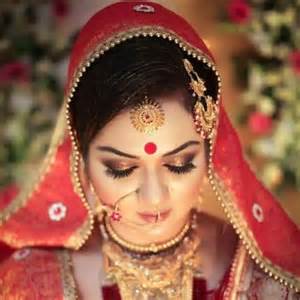
Why do some Indian women have a red dot on their forehead?: Bindi (decoration)

The red dot is called a bindi in Hindu Culture

The red dot is called a bindi. It is a form of body decoration. Culturally, hindus attach a lot of importance to this ornamental mark and call it by various names - pottu, bindi, tikka, tilakam and sindoor. There are various theories on why it is important and I will share a few here.

The 'Hot' Spot

The area between the eyebrows on the forehead is the spot of 'agna' chakra. In yogic science, this spot is considered as one of immense power, often called as the third eye. It signifies a point of awakening and is usually activated while pursing spiritual sciences. In Chinese acupressure sciences, this point is considered to be a converging point for nerves and a massage is believed to relieve headaches. Ayurveda also believes massaging this spot will relieve stress and insomnia.

The 'Magic' Ingredient

Traditionally kumkum ( a mixture of turmeric and lime) or chandan (sandalwood) was used to mark a bindi. Kumkum is hygroscopic in nature and can greatly assist to remove excess water from one's head. Tumeric's anti-bacterial properties are helpful too. Further, the colour red is believed to aid spiritually. Chandan or sandalwood is renowned for its 'cooling' properties. For a hot tropic country, application of chandan on forehead ( a nerve centre) helps to cool one's entire system.

On a religious note, the color red symoblises 'shakti', the goddess of strength. A kumkum is marked on girls after marriage denoting strength and wishing for peace.


For Married women its called Sindoor

It is called Sindoor (main ingredient is generally vermillion which is a sulfide of mercury) and worn by generally married Hindu women (some religious men use it too, but not as a dot but as a big stretched out thumb print on the forehead). They also put a line of this powder along the parting of hair on their head. Both of these traditionally signify the marital status of the woman/girl - kind of like wedding rings/band in the western world. It signifies love, fertility, prosperity etc. for the married woman. According to some beliefs of Hinduism the forhead/middle of the two brows is the seat of wisdom/one of the six chakras/Brahma/Spiritual power (or the all seeing third eye). So traditionally the dot is used to store the energy of the power/signify and remind us of its existence.

However, you may also be talking about the coloured (any colour possible) dot made of suede or other material with a glue/sticky back and worn by women all over india irrespective of (at least as far as I know) religious following or marital status. That is called a 'bindi', derived and minisculized from 'bindoo' - which is the Sanskrita word for 'dot'. This is just a cosmetics and beauty enhancer.


Women and men have acupressure point in their fore head which when pressed by the ring finger of right hand (I,e when wearing a bindhi or kum kum) the acupoint is pressed and that nerve activates the brain. 
 

One can control ones mind by concentrating over this point.  That's why to avoid this kind of attraction women put bindhi which will cover the point to avoid such happenings.  There will be a controversy based on religion in this kind of questions. Hindus put bindhi but what about Muslims ?? Yes they also protect themselves by closing their entire face while wearing burkas. But now a days hindus girls also avoid putting bindhi. Its becoming a fashion. They don't realise the science behind this. 
 

Notice the position of Ajna chakra. That is where bindis have to be rightfully placed.


Chakras are basically energy points that correspond to major points in the physical body (in relation to nerves). They are also believed to be centres of cosmic energy connection of the body. This principle forms the basic for many traditional healing methods like Pranic healing, Reiki and mainly yoga.

Moving towards the question in specific, ajna chakra is the 'seat of concealed wisdom' (as mentioned in Bindi (decoration)). In other words it represents the subconscious mind of individuals and the various thought processes. Negative energy in the form of negative thoughts and black magic enters the body through this chakra. When you place a bindi, you block the negative energy from entering the body.

Traditional bindis are made of kumkum which is basically turmeric and saffron. Turmeric has many many uses in culinary and health sciences and also cosmetics. Similar to how it scientifically blocks UV rays, turmeric in kumkum blocks the negative energy, which i mentioned earlier. Saffron is also generally used for cosmetic purposes.

Also red bindis are said to impart certain beauty to women when they wear it.

I realize that chakras, on which my explanation is based, have not been scientifically proven. I can just say that the previously mentioned techniques like Yoga, Pranic healing, Reiki,etc have proven results and they have originated in various parts of the world, not just India AND that chakras are not just figments of Hindu religion.
 

Indian Visa Processing Guide to


All foreign nationals entering India are required to possess a valid international travel document in the form of a national passport with a valid visa obtained from an Indian Mission or Post abroad.

All Individual visa seekers are requested to apply for the Indian Visa through Online application link , in order to make an application for getting the Indian visa.

The duly signed physical copy of the application form completed in all respect and submitted successfully, is to be submitted at the concerned Indian Visa Application Center (IVAC) or directly to Indian Mission/ Post, on the scheduled date of interview along with the requisite supporting documents. The instructions for filling the form and scheduling the appointment can be seen at Instructions for Regular Visa Application. Important technical information for filling online Indian visa application can be referred at Technical Instructions.

The status of Visa Application can be seen on the link for Visa Enquiry.

The applicants are also requested to visit website of the Indian Mission concerned for detailed information about Indian visa.

Check Your Indian Visa Status Online Here

Visa Categories

Government of India issues the following visas: Business Visa, Conference Visa, Diplomatic Visa, Employment Visa, Emergency Visa, Entry Visa, Journalist Visa, Medical Visa, Missionaries Visa, Permit to re-enter within 2 months, Research Visa, Student Visa, Tourist Visa, Transit Visa. Please follow the link for details on Visa Provision and supporting documents


Fee for Indian Visa

The visa fee depends upon the type of applied for and duration of visa. Visa fee is divided into various types depending upon the case viz; Basic fee, special fee, processing fee by out-sourcing agency. During the online registration process, at the end of the process the basic fee shall be displayed. However, this fee shall be indicative only and final fee shall be charged while submitting the application at the respective counters Fee once received are non refundable even if the visa application is withdrawn, the visa is not granted, or if visa issued is of shorter duration of period than applied for or otherwise issued or returned at a time or on terms and conditions that may vary from those sought by the applicant. For further information on this, please check with local embassy office or Indian Visa Application center office or websites for information on applicable fee and payment methods.

Visa Processing Time

Upon receipt of the Visa Application through Indian Visa Application Center or directly, the Indian Mission/ Post requires a minimum of three working days to process the case and issue a visa depending upon the nationality and excluding special cases.

Photo Requirements

Online India Visa Application allows the Applicant to upload a digital photograph of self to complete the Regular visa application.
Guidelines/procedure to upload a digital photograph
The digital photograph to be uploaded along with the Visa application should meet the following requirements:
  • Format – JPEG
  • Size
    • Minimum 10 KB
    • Maximum 300 KB
  • The height and width of the Photo must be equal.
  • Photo should present Full face, front view, eyes open.
  • Center head within frame and present full head from top of hair to bottom of chin.
  • Background should be plain light colored or white background.
  • No shadows on the face or on the background.
  • Without borders.
  • Make sure that photo presents full head from top of hair to bottom of chin. Head should measure 1 inch to 1-3/8 inches (25mm to 35mm). Make sure eye height is between 1-1/8 inches to 1-3. 

Technical Information to apply online Indian Visa

Important Technical Information for Regular Visa application
  • This site is best viewed in Mozilla Firefox,Google Chrome,Internet Explorer (Windows) version 9.0 and above.
  • The applicant must also have Adobe Acrobat Reader version 7.0 or higher installed on your PC in order to download and print the completed application form.
  • The applicant should use either an Ink-Jet or Laser printer to print the completed Visa Application forms once submitted online.
  • Once the form is filled and submitted, it is requested to submit the signed physical copy of online application form along with the supporting documents and the passport to the concerned Indian Mission on the scheduled appointment date.

Visa Status Enquiry
Click here for Home Page
Application ID
(Enter 12 characters application ID)
Passport Number
Access Code
Develped by NIC, New Delhi
Enter Access Code 


Note: (For Regular Visa)
  • Visa Status Enquiry can be used to know Visa Status.
  • Application ID can be seen on your receipt issued by Indian Mission/Agent where you have submitted your Application.
(For e-Tourist Visa (eTV))
  • Visa Status Enquiry can be used to know Visa Status,Payment Status and to Print e-Tourist Visa.
  • Application ID can be seen in the Acknowledgement Message and also in the printed Application Form.

No Appointment Dates are available indian visa problem

I tried from 2 months.... But when I fill up application form and come in appointment date page.. its show "No Appointment Dates are available"
I don't know why this problem. I spend lot of time for do it using Firefox, Chrome, IE 11 etc. I also do it from different internet line.. but same issue..
Can anybody help me ?
Waiting for a positive reply.


Solutions: You can directly contact the embassy. Sometimes technology may be a problem compared to the process.

Solution 2: You can try for the best time, it will work. (I do it)
08:27:50 AM
12:27:50 PM
05:27:50 PM
08:27:50 PM
10:27:50 PM


Katrina Kaif - Hot Bio

Nickname
Kat

Height
5' 8½" (1.74 m)

Mini Biography
Katrina Kaif is one of eight siblings, all girls, from a mother who is a Caucasian of British Nationality, and a father who was formerly from Kashmir, India, but who has since acquired British citizenship. Her mother is now re-settled in Chennai (formerly known as Madras), the Capital of the state of Tamil Nadu in India.

She spent subsequent years in Hawaii, and then in London, Britain, She started modeling accidentally when she was in Hawaii at the tender age of 14, when she was approached for a jewelry campaign. Thereafter she continued modeling in London.

Continuing to model was the reason she got her break in a Bollywood movie 'Boom' offered by none other than film-maker Kaizad Gustad.

She was flooded with modeling assignments the minute she set her foot on Indian soil, especially with her innocent expressive face, hour-glass figure, and drop-dead gorgeous looks.

Professionally she started off as a model with photographer Atul Kasbekar, and upon being accepted, she received offers from LG, Cola, Fevicol, Lakme, & Veet. It was the Lakme commercial that got her noticed. She retained Matrix as her Manager to accept work on her behalf and at the price she deserved.

Moving to different culture and country was not much of a culture shock for her, as she states that no matter where you come from, the bottom line is that everyone wants to be loved, respected, and cared for.

Despite of her positive attitude, she had been stereotyped as "Indian" by extreme right-wingers in Britain who made it clear that she did not quite fit-in with their "Blonde" Caucasian culture; while on the other hand in India itself she had been ranked as an 'outsider' very much like Sonia Gandhi.

Unlike other artistes from foreign lands, Katrina did not experience any difficulties in getting a visa nor of getting it extended in India.

Although linguistically challenged, Katrina puts on a bold face and states that other Bollywood artistes like Sridevi, who did not know Hindi, did get offers from Bollywood film-makers, and she is no different. She has taken Hindi and dancing lessons to fit in with the Bollywood culture. She likes to display a picture of her learning Kathak dancing where she used to dance 7 hours a day non-stop.

Adorned with soft gorgeous looks, she is not easily intimidated, but admits that she is very emotional, sensitive, and concerned about her privacy, Almost an incurable romantic, she prefers to wear comfortable non-revealing clothes when at home, hates to do her hair, and above all dislikes make-up. Admitting to being lonely in the beginning, but now has several friends who she can hang out with.

Although her first movie 'Boom' was panned by the critics and shunned by the audiences, two other Telugu movies 'Malliswari' and 'Pidugu' did get her noticed. She grossed 70 Lakh Rupees for 'Malliswari' - making her top the list of the highest paid actresses during a South Indian movie debut.
Not done with South Indian movies, she has been signed in a Tamil movie 'Bheema' opposite National Award Winner Vikram.

She has received decent reviews for her part in "Maine Pyar Kyon Kiya", as well as a brief appearance in 'Sarkar'.

Katrina had made Mumbai her base, didn't mind singing and dancing around trees and as a result is now one of the biggest mega-stars, perhaps one of the highest paid female-lead actresses in Bollywood, and a crowd-puller whenever she makes an appearance for a live song and dance number.
Is half English and half Indian.
Indian supermodel
Has seven siblings: six sisters and one brother.
Was born in Hong Kong and then moved to Hawaii till she was about 14, then she moved to London. Presently, she lives in Mumbai.
Unlike other artistes from foreign lands, Katrina did not experience any difficulties in getting a visa nor of getting it extended in India.
She was discovered at age 14 as a model for a jewelry campaign.
When moving to India, she worked for photographer Atul Kasbekar and did commercials for Fevicol, Lakme and Veet among others.
She is very particular about her clothes which she wears a bold outfit on screen or for ads, but she feels more comfortable in not-so-revealing clothes in personal life. And the one thing she hates is make up.
She refuses to speak about her personal life in the media.
Besides walking the ramp for several top designers and being on magazine covers, Katrina has also been the stunning face of Estelle jewelery, Lakme, Pantene, Veet, Kodak cameras, L'Oreal, Samsung, LG etc.
She doesn't do ramp shows anymore.
She was chosen as the face of the year for the Lakme India Fashion Week (2005).
Her favorite Indian designers are Rina Dhaka, Tarun Tahiliani, Rocky S.
Her favorite international designers are Armani, Miu Miu, Prada, Versace.
Favorite actor is Leonardo DiCaprio, Johnny Depp, Shah Rukh Khan, Hrithik Roshan, Aamir Khan. Favorite actresses are Kajol and Madhuri Dixit.
Favorite cricketer is Irfan Pathan.
Favorite movies are Umrao Jaan (1981), Casablanca (1942), and Gone with the Wind (1939).
Prefers acting over modeling.
She enjoys modeling, acting, dancing, playing chess, watching movies, painting, resting, cooking, going to spas, going to the gym, meeting new people, and getting together with friends.
The famous Rs. 2 lakh ($4,814) worth silver dress she flaunts in the movie Welcome (2007/I) was gifted to her by Emilio Pucci.
Voted at the No. 1 spot in FHM India's 100 Sexiest Women in the World poll.
Won Best Female Style Icon at the IIFA Awards.
Won Sabsay Favourite Heroine Award (2008).
Won the British-Indian Actor award for the Zee Cine Awards (2008).
Won the Stardust Breakthrough Performance Award (Female) for Maine Pyaar Kyun Kiya (2005) (2006).
Is the most photographed woman in India.
Is the most searched Bollywood celebrity as per Google's 2008, 2009, and 2010 data.
Is active in various charities and often visits orphanages and hospitals.
The unit of De Dana Dan (2009) was shooting in the Sentosa Nature Park in Singapore when a 10-year-old spotted Kaif. The boy didn't realize that there were some production vehicles moving around the set and started running towards the actress. While running across, he was accidentally hit by a unit van. The boy was bruised but there was no major injury. When Kaif found out about the incident, she immediately asked him to be brought on the sets. She then met him, spent a lot of time and even gave him some chocolates.
She was voted the sexiest Asian woman in the world by Eastern Eye in the years 2008, 2009, 2010 and 2011.
Favorite bands are Muse, Radiohead and Coldplay.

Personal Quotes
It's not my style to either wear minimum clothes, to strip or to even be comfortable with a sex-symbol label. I just want to do good work instead of sporting such meaningless tags. Sex sells, but to a small extent, not always. And this is what filmmakers have to accept. The exposure has to be relevant to the film and its characters and not forced for the sake of titillation. On the contrary, some of the greatest Indian films have been devoid of all these sexual trappings. I know my comfort zone in today's Indian culture and society.
Her thoughts on Bollywood accepting her, being an outsider British girl, into Indian cinema: "I have no complaints. I think I'm especially lucky. As you said, I've come from outside and I'm not even anywhere closely connected. But I have absolutely no problem here. People have been more than welcoming, even before I was ready. There was a time when I felt that I need to take time to understand more about the industry, the workings of it. I was doing my modeling, which I really wanted to do at the time. So that's why even my entry into films was later than people expected." (Stardust magazine, July 2006)
"I've been very blessed, I think, or what do you call it... mmm... lucky to get at this stage what I have. It's not like I've come from acting school and done work at an academy or something. I feel I've been given a very huge chance and opportunity." (Stardust magazine, July 2006)
My Hindi was bad about three years ago. I wanted to achieve a certain status in modeling. Through that I got confidence to get into movies. Maine Pyaar Kyun Kiya (2005) came at the right time. I had done kathak training which apart from teaching you about dancing also teaches you about emotions. After that experience, I feel this year will be a much better year for me.
I think I have been very lucky so far. I have done a lot of ads and also some films down south. People have liked me. I guess I have found a balance.
Wait and watch. Jee Karda should be on air later this month. We shot at 4am every day to capture the light and it was scorching. To keep cool we would stay in shades and sip fruit juice or mint tea.
Egypt is among the most beautiful countries I have visited - the pyramids, the temples and the landscape are absolutely exotic. I even enjoyed the barbecue dinner on a boat on the Nile. We shot in a number of places and I've come back with fond memories of my trip.
I unwind myself by taking off the costume and make-up as soon as the shoot is over! And get a spa treatment. It is extremely relaxing. Unfortunately, the kind of lifestyle and schedule we have, we hardly get time. Not only actors, but I have seen a lot of directors and journalists with skin problems and believe me, all that can be cured by a spa treatment.
Salman Khan did not help me get movie offers. What rubbish! Will any producer take a risk of millions of rupees at the instance of any person? Everyone knows that the film industry is highly competitive, and one gets a job on one's talent only and not on any recommendation.
My relationship with Salman Khan is too personal to talk about. I take my work like any other regular job and what I do in my personal life is no one's business. I'd rather let my work do all the talking.
Every one has her own love life. Every one has a dream to get a perfect life partner. But this is not so easy in real life. In fact, one doesn't love, it happens. As far as I am concerned, I love a boy who is linked with the film industry. However, I shall not name him. You never know what may happen in future.

HAPPY FATHER’S DAY - Game Contest Mig33

HOW TO JOIN: HAPPY FATHER’S DAY
1. Send DADDY, PITA, BABBA gifts to your friends and family in mig33.
2. Top 5 SENDERS of DADDY, PITA, BABBA virtual gifts will win this contest.
3. Only the DADDY, PITA, BABBA virtual gifts are valid for this contest.
4. Contest period: 16 June 2013 (00:00 GMT to 11:59 GMT)
5. Contest is GLOBAL & OPEN to all mig33 Users.
6. Winners will be announced after 21 June 2013
7. The use of 3rd party software & Multi IDs are strictly prohibited. Any participants caught using any 3rd party software will be disqualified and banned.
8. Non compliance may result in disqualification in the Contest. An alternate winner from a reserved list will be awarded the prize.
9. mig33 reserves the right at its sole discretion to substitute any of the prizes of equal or greater value.
10. mig33 reserves the right to amend the Terms and Conditions of the Contest at any time without giving any prior notice to any party.
11. By participating in the Contest, participants agree to be bound by the Terms and Conditions and judges decisions are final and binding. No correspondence will be entertained.
12. The prizes will be in the form of migCredits.
1st Prize: US $40
2nd Prize: US $30
3rd Prize: US $20
4th Prize & 5th Prize: US$5 each

Sonakshi Sinha : Indian Actress

Sonakshi Sinha (born 2 June 1987) is an Indian Bollywood actress. She marked her debut in the Hindi film industry with 2010's Dabangg opposite Salman Khan, which went onto become the highest grossing Bollywood film of the year. Sinha received positive reviews for her performance, as well as the Filmfare Award for Best Female Debut. Post her debut, she went on to star in some of Bollywood's biggest hits, including Rowdy Rathore, Son of Sardar and Dabangg 2.


She is the daughter of an actor and a politician Shatrughan Sinha and Poonam Sinha. She is the youngest of three children with two twin brothers, Luv Sinha and Kussh Sinha. She studied Fashion Designing at Shreemati Nathibai Damodar Thackersey Women's University in Mumbai.

Sinha started her career as a costume designer. She designed costumes for movie Mera Dil Leke Deko in 2005. and walked the ramp at the Lakme Fashion Week 2008 and then again in Lakme Fashion Week 2009.
She made her acting debut in the 2010 film Dabangg co-starring Salman Khan. It went on to become one of the highest grossing Bollywood films. Speaking of her role, she said that she had to lost 30 kg over two years to prepare for her character of a village girl by a combination of proper diet and vigorous exercise. She added that she had been observing people and trying to pick up nuances as a step of further preparation.
She featured as the cover girl of Indian edition of Maxim magazine for the month December 2010.
Although Sinha had no film release in 2011, she won quite a few awards for her debut. This included the Filmfare Award as well as the IIFA Awards among many others.
Sinha's weight has always been a frequent discussion in the media. She's one of the few actresses however not afraid to talk about such issue even slamming the media for their focus on weight, criticism of actresses like herself and pressures they put on women to be movie star fit.She Used Salman Khan contacts to get movies , and can be seen with full family at Salman's Residence . She's considered a role model to many young woman fighting to break the size zero mold.

Study in India - Music & performing arts

Indian music follows different rules to Western music, so allow several weeks to get any benefit from music courses. Most centres provide instruments, but invest in your own if you mean to continue to play at home.
Goa Courses in classical Indian singing and tabla in Arambol.
Gujarat Classical Indian dance classes in Ahmedabad.
Himachal Pradesh Various courses in Indian classical music in McLeod Ganj and Bhagsu.
Karnataka Classical Indian dance classes at Nrityagram in Hessaraghatta, and tabla (pair of drums) classes at Shruthi Musical Works in Mysore.
Kerala Courses in kathakali (traditional Keralan dance opera) and kootiattam (traditional Sanskrit drama) in Trivandrum, and dance centres near Thrissur and Kottayam.
Kolkata Aurobindo Bhawan offers classical Indian dance classes.
Rajasthan Tabla, flute, singing and Kathak (Indian classical dance) courses in Pushkar, Jaipur, Udaipur and Jodhpur.
Tamil Nadu Courses in bharathanatiyam (dance), singing and various musical instruments in Puducherry (Pondicherry); Kalakshetra Arts Village in Chennai offers courses in classical Tamil dance and music.
Uttar Pradesh Sitar (stringed instrument), tabla and classical dance classes in Varanasi.
Uttarakhand Classical dance and musical instrument classes in Rishikesh.

History of India

India’s story is one of the grand epics of world history. Throughout thousands of years of great civilisations, invasions, the birth of religions and countless cataclysms, India has time and again proved itself to be, in the words of its first prime minister, Jawaharlal Nehru, ‘a bundle of contradictions held together by strong but invisible threads’. Indian history has always been a work-in-progress, a constant process of reinvention and accumulation that can prove elusive for those seeking to grasp its essential essence. And yet, from its myriad upheavals, a vibrant, diverse and thoroughly modern nation has emerged, as enduring as it is dynamic and increasingly well equipped to meet the challenges of the future.
Indus valley civilisation

The Indus Valley, straddling the modern India–Pakistan border, is the cradle of civilisation on the Indian subcontinent. The first inhabitants of this land were nomadic tribes who cultivated land and kept domestic animals; indeed, it is no leap of the imagination to wonder whether in some parts of rural India, little has changed. Over thousands of years, an urban culture began to emerge from these tribes, particularly from 3500 BC. By 2500 BC large cities were well established, the focal points of what became known as the Harappan culture, which would flourish for more than 1000 years.

The great cities of the Mature Harappan period were Moenjodaro and Harappa (both excavated in the 1920s) in present-day Pakistan, and Lothal near Ahmedabad. Lothal can still be visited and from the precise, carefully laid-out street plan, some sense of this sophisticated 4500-year-old civilisation is still evident. Harappan cities often had a separate acropolis, suggesting a religious function, and the great tank at Moenjodaro may have been used for ritual bathing purposes. The major Harappan cities were also notable for their size – estimates put the population of Moenjodaro as high as 40,000 to 50,000.

By the middle of the 3rd millennium BC the Indus Valley culture was the equal of other great civilisations emerging at the time. The Harappans traded with Mesopotamia, and developed a system of weights and measures and a highly developed art in the form of terracotta and bronze figurines. Recovered relics, including models of bullock carts and jewellery, offer the earliest evidence of a distinctive Indian culture. Indeed, many elements of Harappan culture would later become assimilated into Hinduism: clay figurines found at these sites suggest worship of a Mother goddess (later personified as Kali) and a male three-faced god sitting in the attitude of a yogi (the prehistoric Shiva) attended by four animals. Black stone pillars (associated with phallic worship of Shiva) and animal figures (the most prominent being the humped bull; later Shiva’s mount) have also been discovered.

^ Back to top
Early invasions & the rise of religions

The Harappan civilisation fell into decline from the beginning of the 2nd millennium BC. Some historians attribute the end of the empire to floods or decreased rainfall, which threatened the Harappans’ agricultural base. The more enduring, if contentious, theory is that an Aryan invasion put paid to the Harappans, despite little archaeological proof or written reports in the ancient Indian texts to that effect. As a result, some nationalist historians argue that the Aryans (from a Sanskrit word meaning noble) were in fact the original inhabitants of India and that the invasion theory was actually invented by self-serving foreign conquerors. Others say that the arrival of Aryans was more of a gentle migration that gradually subsumed Harappan culture.

Those who defend the invasion theory believe that from around 1500 BC Aryan tribes from Afghanistan and Central Asia began to filter into northwest India. Despite their military superiority, their progress was gradual, with successive tribes fighting over territory and new arrivals pushing further east into the Ganges plain. Eventually these tribes controlled northern India as far as the Vindhya Hills. Many of the original inhabitants of northern India, the Dravidians, were pushed south.

The Hindu sacred scriptures, the Vedas, were written during this period of transition (1500–1200 BC) and the caste system became formalised.

As the Aryan tribes spread across the Ganges plain in the late 7th century BC, many were absorbed into 16 major kingdoms, which were, in turn, amalgamated into four large states. Out of these states arose the Nanda dynasty, which came to power in 364 BC, ruling over huge swathes of North India.

During this period, the Indian heartland narrowly avoided two invasions from the west which, if successful, could have significantly altered the path of Indian history. The first was by the Persian king Darius (521–486 BC), who annexed Punjab and Sindh (on either side of the modern India–Pakistan border). Alexander the Great advanced to India from Greece in 326 BC, but his troops refused to go beyond the Beas River in Himachal Pradesh. Alexander turned back without ever extending his power into India itself.

The period is also distinguished by the rise of two of India’s most significant religions, Buddhism and Jainism, which arose around 500 BC. Both questioned the Vedas and condemned the caste system, although, unlike the Buddhists, the Jains never denied their Hindu heritage and their faith never extended beyond India.

^ Back to top
The Mauryan Empire & its aftermath

If the Harappan culture was the cradle of Indian civilisation, Chandragupta Maurya was the founder of the first great Indian empire. He came to power in 321 BC, having seized the throne from the Nandas, and he soon expanded the empire to include the Indus Valley previously conquered by Alexander.

From its capital at Pataliputra (modern-day Patna), the Mauryan empire encompassed much of North India and reached as far south as modern-day Karnataka. The Mauryas were capable of securing control over such a vast realm through the use of an efficient bureaucracy, organised tiers of local government and a well-defined social order consisting of a rigid caste system.

The empire reached its peak under emperor Ashoka. Such was Ashoka’s power to lead and unite that after his death in 232 BC no-one could be found to hold the disparate elements of the Mauryan empire together. The empire rapidly disintegrated and collapsed altogether in 184 BC.

None of the empires that immediately followed could match the stability or enduring historical legacy of the Mauryans. The Sungas (184–70 BC), Kanvas (72–30 BC), Shakas (from 130 BC) and Kushanas (1st century BC until 1st century AD, and into the 3rd century in a diminished form) all had their turn, with the latter briefly ruling over a massive area of North India and Central Asia.

Despite the multiplicity of ruling powers, this was a period of intense development. Trade with the Roman Empire (overland, and by sea through the southern ports) became substantial during the 1st century AD; there was also overland trade with China.

The Golden Age Of The Guptas

The empires that followed the Mauryans may have claimed large areas of Indian territory as their own, but many secured only nominal power over their realms. Throughout the subcontinent, small tribes and kingdoms effectively controlled territory and dominated local affairs.

In AD 319 Chandragupta I, the third king of one of these tribes, the little-known Guptas, came to prominence by a fortuitous marriage to the daughter of one of the most powerful tribes in the north, the Liccavis. The Gupta empire grew rapidly and under Chandragupta II (r 375–413) achieved its greatest extent. The Chinese pilgrim Fahsien, visiting India at the time, described a people ‘rich and contented’, ruled over by enlightened and just kings.

Poetry, literature and the arts flourished, with some of the finest work done at Ajanta, Ellora, Sanchi and Sarnath. Towards the end of the Gupta period, Hinduism became the dominant religious force and its revival eclipsed Jainism and Buddhism; the latter in particular went into decline and, deprived of Ashoka’s patronage, would never again be India’s dominant religion.

The invasions of the Huns at the beginning of the 6th century signalled the end of this era, and in 510 the Gupta army was defeated by the Hun leader Toramana. Power in North India again devolved to a number of separate Hindu kingdoms.

^ Back to top

Ads by Google

Hotels in Zagreb

Accomodation in 5 star hotels in Zagreb. Book now!

www.hupzagreb.com/Hotels-In-Zagreb

Manfacturers

Find Manfacturers on Internet's Top B2B Directory!

www.GlobalSources.com/India

Best Hotel Rome

Book Hotel Raffaello Colosseum. Book in Advance and Save!

www.HotelRaffaello.it/
The Hindu South

Southern India has always laid claim to its own unique history. Insulated by distance from the political developments in the north, a separate set of powerful kingdoms emerged, among them the Shatavahanas (who ruled over central India while the Kushanas held sway in the north), Kalingas and Vakatakas. But it was from the tribal territories on the fertile coastal plains that the greatest southern empires – the Cholas, Pandyas, Chalukyas, Cheras and Pallavas – came into their own.

The Chalukyas ruled mainly over the Deccan region of central India, although their power occasionally extended further north. With a capital at Badami in modern-day Karnataka, they ruled from 550 to 753 before falling to the Rashtrakutas. An eastern branch of the Chalukyas, with its capital at Kalyani in Karnataka, rose and ruled again from 972 to 1190.

In the far south, the Pallavas pioneered Dravidian architecture with its exuberant, almost baroque, style. The surviving architectural high points of Pallava rule are to be found in the shore temple and Five Rathas in Mamallapuram (Mahabalipuram), the temples of the erstwhile Pallava capital at Kanchipuram and the Rock Fort Temple at Trichy (Tiruchirappalli).

The south’s prosperity was based on long-established trading links with other civilisations, among them the Egyptians and Romans. In return for spices, pearls, ivory and silk, the Indians received Roman gold. Indian merchants also extended their influence to Southeast Asia. In 850 the Cholas rose to power and superseded the Pallavas. They soon set about turning the south’s far-reaching trade influence into territorial conquest. Under the reign of Raja Raja Chola I (985–1014) they controlled almost the whole of South India, the Deccan plateau, Sri Lanka, parts of the Malay peninsula and the Sumatran-based Srivijaya kingdom.

Not all of their attention was focused overseas, however, and the Cholas left behind some of the finest examples of Dravidian architecture, most notably the sublime Brihadishwara Temple in Thanjavur and Chidambaram’s stunning Nataraja Temple. Both Thanjavur and Chidambaram served as Chola capitals.

Throughout, Hinduism remained the bedrock of South Indian culture.

^ Back to top
The Muslim North

While South India guarded its resolutely Hindu character, North India was convulsed by Muslim armies invading from the northwest.

In the vanguard of Islamic expansion was Mahmud of Ghazni. Today, Ghazni is a nondescript little town between Kabul and Kandahar in Afghanistan. But in the early years of the 11th century, Mahmud turned it into one of the world’s most glorious capital cities, which he funded by plundering his neighbours’ territories. From 1001 to 1025 Mahmud conducted 17 raids into India, most infamously on the famous Shiva temple at Somnath in Gujarat. The Hindu force of 70, 000 died trying to defend the temple, which eventually fell in early 1026. In the aftermath of his victory, Mahmud, not particularly intent on acquiring new territory at this stage, transported a massive haul of gold and other booty back to his capital. These raids effectively shattered the balance of power in North India, allowing subsequent invaders to claim the territory for themselves.

Following Mahmud’s death in 1033, Ghazni was seized by the Seljuqs and then fell to the Ghurs of western Afghanistan, who similarly had their eyes on the great Indian prize. The Ghur style of warfare was brutal – the Ghur general, Ala-ud-din, was known as ‘Burner of the World’.

In 1191 Mohammed of Ghur advanced into India. Although defeated in a major battle against a confederacy of Hindu rulers, he returned the following year and routed his enemies. One of his generals, Qutb-ud-din, captured Delhi and was appointed governor; it was during his reign that the great Delhi landmark, the Qutb Minar complex, was built. A separate Islamic empire was established in Bengal and within a short time almost the whole of North India was under Muslim control.

Following Mohammed’s death in 1206, Qutb-ud-din became the first sultan of Delhi. His successor, Iltutmish, brought Bengal back under central control and defended the empire from an attempted Mongol invasion. Ala-ud-din Khilji came to power in 1296 and pushed the borders of the empire inexorably south, while simultaneously fending off further attacks by the Mongols.

^ Back to top
North meets South

Ala-ud-din died in 1320, and Mohammed Tughlaq ascended the throne in 1324. In 1328 Tughlaq took the southern strongholds of the Hoysala empire, which had centres at Belur, Halebid and Somnathpur. India was Tughlaq’s for the taking.

However, while the empire of the pre-Mughal Muslims would achieve its greatest extent under Tughlaq’s rule, his overreaching ambition also sowed the seeds of its disintegration. Unlike his forebears (including great rulers such as Ashoka), Tughlaq dreamed not only of extending his indirect influence over South India, but of controlling it directly as part of his empire.

After a series of successful campaigns Tughlaq decided to move the capital from Delhi to a more central location. The new capital was called Daulatabad and was near Aurangabad in Maharashtra. Not a man of half measures, Tughlaq sought to populate the new capital by force-marching the entire population of Delhi 1100km south, resulting in great loss of life. However, he soon realised that this left the north undefended and so the entire capital was moved north again. The superb hilltop fortress of Daulatabad stands as the last surviving monument to his megalomaniac vision.

The days of the Ghur empire were numbered. The last of the great sultans of Delhi, Firoz Shah, died in 1388 and the fate of the sultanate was sealed when Tamerlane (Timur) made a devastating raid from Samarkand (in Central Asia) into India in 1398. Tamerlane’s sacking of Delhi was truly merciless; some accounts say his soldiers slaughtered every Hindu inhabitant.

After Tughlaq’s withdrawal from the south, several splinter kingdoms arose. The two most significant were the Islamic Bahmani sultanate, which emerged in 1345 with its capital at Gulbarga, and later Bidar, and the Hindu Vijayanagar empire, founded in 1336 with its capital at Hampi. The battles between the two were among the bloodiest communal violence in Indian history and ultimately resolved nothing in the two centuries before the Mughals ushered in a more enlightened age.

The Mughals

Even as Vijayanagar was experiencing its last days, the next great Indian empire was being founded. The Mughal empire was massive, and covered, at its height, almost the entire subcontinent. Its significance, however, lay not only in its size. Mughal emperors presided over a golden age of arts and literature and had a passion for building that resulted in some of the finest architecture in India. In particular, Shah Jahan’s sublime Taj Mahal ranks as one of the wonders of the world.

The founder of the Mughal line, Babur (r 1526–30), was a descendant of both Genghis Khan and Tamerlane. In 1525, armed with this formidable lineage, he marched into Punjab from his capital at Kabul. With technological superiority brought by firearms, and consummate skill in simultaneously employing artillery and cavalry, Babur defeated the numerically superior armies of the sultan of Delhi at the Battle of Panipat in 1526.

Despite this initial success, Babur’s son, Humayun (r 1530–56) was defeated by a powerful ruler of eastern India, Sher Shah, in 1539 and forced to withdraw to Iran. Following Sher Shah’s death in 1545, Humayun returned to claim his kingdom, eventually conquering Delhi in 1555. He died the following year and was succeeded by his young son Akbar (r 1556–1605) who, during his 49-year reign, managed to extend and consolidate the empire until he ruled over a mammoth area.

True to his name, Akbar (which means ‘great’ in Arabic) was probably the greatest of the Mughals, for he not only had the military ability required of a ruler at that time, but was also a just and wise ruler and a man of culture. He saw, as previous Muslim rulers had not, that the number of Hindus in India was too great to subjugate. Although Akbar was no saint – reports of massacres of Hindus at Panipat and Chitrod tarnish his legacy – he remains known for integrating Hindus into his empire and skilfully using them as advisers, generals and administrators. Akbar also had a deep interest in religious matters, and spent many hours in discussion with religious experts of all persuasions, including Christians and Parsis.

Jehangir (r 1605–27) ascended to the throne following Akbar’s death. Despite several challenges to the authority of Jehangir himself, the empire remained more or less intact. In periods of stability Jehangir took the opportunity to spend time in his beloved Kashmir, eventually dying en route there in 1627. He was succeeded by his son, Shah Jahan (r 1627–58), who secured his position as emperor by executing all male relatives who stood in his way. During his reign, some of the most vivid and permanent reminders of the Mughals’ glory were constructed; in addition to the Taj Mahal, he also oversaw the construction of the mighty Red Fort in Delhi and converted the Agra Fort into a palace that would later become his prison.

The last of the great Mughals, Aurangzeb (r 1658–1707), imprisoned his father (Shah Jahan) and succeeded to the throne after a two-year struggle against his brothers. Aurangzeb devoted his resources to extending the empire’s boundaries, and thus fell into much the same trap as that of Mohammed Tughlaq some 300 years earlier. He, too, tried moving his capital south (to Aurangabad) and imposed heavy taxes to fund his military. A combination of decaying court life and dissatisfaction among the Hindu population at inflated taxes and religious intolerance weakened the Mughal grip.

The empire was also facing serious challenges from the Marathas in central India and, more significantly, the British in Bengal. With Aurangzeb’s death in 1707, the empire’s fortunes rapidly declined, and Delhi was sacked by Persia’s Nadir Shah in 1739. Mughal ‘emperors’ continued to rule right up until the Indian Uprising in 1857, but they were emperors without an empire.

Getting India & away - Travel

Travel documents Tickets

An onward or return air ticket is a condition of the tourist visa, so few visitors buy international tickets inside India. Only designated travel agents can book international flights, but fares are normally the same if you book directly with the airlines. The cheapest time to visit is generally the monsoon (June to August). The departure tax of Rs 500 (Rs 150 for most South and Southeast Asian countries) and the Rs 200 passenger service fee is included in the price of almost all tickets.

***NB: Conditions have recently changed for Indian tourist visas. For more information, see our Visas section.

Contact a travel agent or surf the web to get up-to-the-minute fares and flight schedules. Advertisements for discount travel agencies appear in the travel pages of major newspapers and listings magazines. Note that fares on airline websites are sometimes just as cheap as going through an agent. Alternatively, try the following international online ticket agencies:

Ebookers (www.ebookers.com)Expedia (www.expedia.com)

Flight Centre International (www.flightcentre.com)

Flights.com (www.tiss.com)

STA Travel (www.statravel.com)

Travelocity (www.travelocity.com)


Sea

There are several sea routes between India and surrounding islands but none leave Indian sovereign territory. There has been talk of a passenger ferry service between southern India and Colombo in Sri Lanka but this has yet to materialise. Inquire locally to see if there has been any progress.
Land
Border crossings

Although most visitors fly into India, the overland route from Nepal is extremely popular and smaller numbers of travellers enter India from Pakistan and Bangladesh. For more on these routes, consult Lonely Planet’s Istanbul to Kathmandu, or see the ‘London to India’ section on www.seat61.com/India.htm.

If you enter India by bus or train you’ll be required to disembark at the border for standard immigration and customs checks. You must have a valid Indian visa in advance as no visas are available at the border. The standard Indian tourist visa allows multiple entries within a six-month period.

Drivers of cars and motorbikes will need the vehicle’s registration papers, liability insurance and an International Driving Permit. You’ll also need a Carnet de passage en douane, which acts as a temporary waiver of import duty. To find out the latest requirements for the paperwork and other important driving information contact your local automobile association.
Bangladesh

Foreigners can use four of the land crossings between Bangladesh and India, all in West Bengal or the Northeast States. Exiting Bangladesh overland is complicated by red tape – if you enter by air, you require a road permit (or ‘change of route’ permit) to leave by land. This free permit can be obtained in Dhaka at the Directorate of Immigration and Passports (02-9131891/9134011; Sher-e-Bangla Nagar, Agargaon Rd; 9am-5pm Sun-Thu) in two to three working days; bring several passport photos. Some travellers have also reported problems exiting Bangladesh overland with the visa issued on arrival at Dhaka airport.

Heading from India to Bangladesh, tourist visas should be obtained in advance from a Bangladeshi mission. Delhi’s Bangladesh embassy (011-24121389; EP39 Dr Radakrishnan Marg, Chanakyapuri; applications 9.30am-11pm Mon-Fri) issues visas in two working days with two passport photos; fees vary depending on nationality. Visas can also be obtained from the Bangladeshi missions in Kolkata and Agartala.

Heading from Bangladesh to India, you must pre-pay the exit tax at a designated branch of the Sonali Bank, which may be some distance from the border post.
Kolkata to Dhaka

There are daily bus services from Kolkata to Dhaka, crossing the India–Bangladesh border at Benapol. Plans for a train link between Kolkata and Dhaka have dragged on for years – inquire locally for progress reports.
Siliguri to Chengrabandha/Burimari

This minor northern border crossing is accessible from Siliguri in West Bengal. You must take a private bus from outside Tenzin Norgay central bus station to Jalpaiguri (Rs 40, two hours) and change there for the border post at Chengrabandha.
Shillong to Sylhet

This little-used crossing offers a handy back route from northeast India to Bangladesh. Share jeeps run every morning from Bara Bazaar in Shillong to the border post at Dawki, where you can walk or catch a taxi to the bus station in Tamabil, which has regular buses to Sylhet.
Agartala to Dhaka

The Bangladesh border is 4km from Agartala and several daily trains run on to Dhaka from Akhaura on the Bangladesh side of the border.
Bhutan

Phuentsholing is the main entry and exit point between India and Bhutan; you now need a full Bhutanese visa to enter the country, which must be obtained at least 15 days before your trip from a registered travel agent listed under the Department of Tourism, Bhutan (www.tourism.gov.bt).

Bhutan visas for non-Indians require a prepaid tour (minimum US$200 to US$240 per day, all-inclusive). Tour and visa can be arranged within two days through RCPL Travels (24400665; travelcal@vsnl.net ; www.kingdomofbhutan.info ; 5/4 Ballygunge Pl, Kolkata).
Siliguri/Kolkata to Phuentsholing

Buses from Kolkata and Siliguri to Phuentsholing are run by Bhutan Transport Services. From Kolkata, there’s a direct bus at 7pm on Tuesday, Thursday and Saturday (Rs 300, 20 hours). There’s also a rail route from Siliguri via Alipurduar (on the main train line between Siliguri and Guwahati) connecting with local buses to the border.
Nepal

The security situation in Nepal has improved massively since the ceasefire in 2006. Nevertheless, it makes sense to check the security situation before crossing into Nepal by land – local newspapers and international news websites are good places to start.

Political and weather conditions permitting, there are five land border crossings between India and Nepal:

Sunauli in Uttar Pradesh to Bhairawa in central Nepal

Raxaul in Bihar to Birganj in central Nepal

Panitanki in West Bengal to Kakarbhitta in eastern Nepal

Jamunaha in Uttar Pradesh to Nepalganj in western Nepal

Banbassa in Uttaranchal to Mahendranagar in western Nepal

Two-month single-entry visas for Nepal (US$30) are available at all the border crossings but payment is due in US dollars and you need two passport photos. Alternatively, obtain a single-entry or six-month multiple-entry visa (US$80) in advance from a Nepalese mission. In Delhi, the Nepal embassy (011-23327361; Barakhamba Rd; applications 9am-noon Mon-Fri) issues visas in one day with two passport photos. In Kolkata the Nepal consulate (033-24561224; 1 National Library Ave, Alipore; 9am-4pm Mon-Fri) issues visas while you wait.
Sunauli to Bhairawa

The easiest crossing for Delhi or Varanasi, with connections on to Kathmandu, Pokhara and Lumbini. There are daily buses to Sunauli from Varanasi (Rs 172, 10 hours) or Delhi (Rs 1400, 36 hours), or you can travel by train to Gorakhpur and take a local bus to Sunauli from there.
Banbassa to Mahendranagar

This intriguing back route into Nepal provides access to the little-visited western Terai. However, the route is often blocked by flooding and landslides in the monsoon and it’s sensible to check the political situation before you travel. Daily buses to Banbassa leave Delhi’s Anand Vihar bus stand (bookings 011-22141611) hourly until late (Rs 210, 10 hours).
Raxaul to Birganj

This crossing is convenient for Kolkata, Patna and the eastern plains, and there are onward connections to Kathmandu. Daily buses run to Raxaul from Patna and Kolkata, but it’s more comfortable to jump on the daily Mithila Express train from Kolkata’s Howrah train station – see the entry under Raxaul and the boxed text for information on crossing the border.
Panitanki to Kakarbhitta

The handiest crossing for Darjeeling, Sikkim and the Northeast States. Buses and share jeeps run to the border from Siliguri and several other towns in West Bengal, and you can explore the eastern Terai as you travel on to Kathmandu.
Jamunaha to Nepalganj

Plenty of domestic tourists cross into Nepal at Jamunaha in Uttar Pradesh, but most foreign travellers stick to more convenient crossings. However, Nepalganj is a useful gateway for Nepal’s Royal Bardia National Park and there are regular onward flights to Kathmandu. Buses run regularly from Lucknow to Rupaidha Bazar (Rs 160, seven hours), a short rickshaw ride from the Jamunaha border post. Alternatively, you can take a train to Nanpara, and change to a bus or taxi for the 17km trip to the border.
Attari to Wagah (Amritsar to Lahore)

The main transit point between India and Pakistan is the border post between Attari, near Amritsar, and Wagah, near Lahore. Regular buses run from Amritsar to the border and there are regular onward connections from Wagah to Lahore. There are also through bus and train services all the way from Delhi. Try to coordinate your crossing with the spectacular closing of the border cere­mony.
Delhi to Lahore

If you prefer to keep things simple, there are direct bus and train services between Delhi and Lahore. However, these services are extremely crowded and clearing the border formalities can take anywhere between two and five hours – compared to one or two hours if you travel independently. Security is also a serious concern – the Delhi–Lahore train was bombed by militants in February 2007, killing 67 people.

The Lahore Bus Service leaves from Delhi’s Dr Ambedkar Bus Station office (011-23318180 or 23712228; Delhi Gate; 9am-7pm Mon-Sat) at 6am on Tuesday, Wednesday, Friday and Sunday, arriving in Lahore 12 hours later. The fare is Rs 1250 one-way (advance bookings are essential). The baggage limit is 20kg per person (Rs 60 per extra kg, maximum 15 kg) plus one piece of hand luggage.

The Samjhauta Express train leaves the Old Delhi train station (purchase tickets here) on Wednesday and Sunday at 10.50pm and arrives at the Indian border crossing of Attari at 7am, where passengers disembark for customs checks and visa procedures, before reboarding for the 30 minute trip to Lahore. Tickets cost Rs 209 in sleeper class. However, services may be disrupted following the February 2007 bomb attack.
Rajasthan to Pakistan

After 35 years of wrangling, the 4889 Thar Express train from Jodhpur in Rajasthan to the border crossing at Munabao/Khokraparand onto Karachi in Pakistan resumed in early 2006. Unfortunately, services were suspended almost immediately because of flood damage to the track during the 2006 monsoon. A limited service resumed in February 2007, with a maximum of 400 passengers in each direction. However, schedules are erratic so check locally in Jodhpur for departure times.
Entering the destination
Entering the country

Entering India by air or land is relatively straightforward, with standard immigration and customs procedures.

Passport

To enter India you need a valid passport, visa and an onward/return ticket. If your passport is lost or stolen, immediately contact your country’s representative. It’s wise to keep photocopies of your airline ticket and the identity and visa pages from your passport in case of emergency. There are restrictions on entry for some nationalities.


Air
Airports & airlines

India has four main gateways for international flights, and international flights also land in Bengaluru (Bangalore), Guwahati and Amritsar – for details, see www.indianairports.com. India is a big county so it makes sense to fly into the nearest airport to the area you want to visit.

Chennai (Madras; MAA; Anna International Airport; 044-22560551; www.chennaiairport.com)

Delhi (DEL; Indira Gandhi International Airport; 011-25652011; www.delhiairport.com)

Kolkata (Calcutta; CCU; Netaji Subhas Chandra Basu International Airport; 033-25118787; www.calcuttaairport.com)

Mumbai (Bombay; BOM; Chhatrapati Shivaji International Airport; 022-26829000; www.mumbaiairport.com)

India’s national carrier is Air India (www.airindia.com) and the state-owned domestic carrier Indian Airlines (www.indian-airlines.nic.in) also offers flights to 20 countries in Asia and the Middle East (though it has a poor safety record). The more reliable private airlines Jet Airways (www.jetairways.com) and Air Sahara (www.airsahara.net) offer flights to Colombo, Kathmandu and the Maldives. Jet has recently started longhaul flights to London, Bangkok, Kuala Lumpur and Singapore.

Other airlines flying to and from India (websites have contact details) :

Aeroflot (code SU; www.aeroflot.org) Hub: Sheremetyevo International Airport, Moscow.

Air Canada (code AC; www.aircanada.com) Hub: Vancouver Airport.

Air France (code AF; www.airfrance.com) Hub: Charles de Gaulle, Paris.

Air India (code AI; www.airindia.com) Hub: Indira Gandhi International Airport, Delhi.

Alitalia (code AZ; www.alitalia.com) Hub: Fiumicino International Airport, Rome.

American Airlines (code AA; www.aa.com) Hub: Dallas/Fort Worth International Airport.

Austrian Airlines (code OS; www.aua.com) Hub: Vienna International Airport.

Biman Bangladesh Airlines (code BG; www.bimanair.com) Hub: Zia International Airport, Dhaka.

British Airways (code BA; www.british-airways.com) Hub: Heathrow Airport, London.

Cathay Pacific Airways (code CX; www.cathaypacific.com) Hub: Hong Kong International Airport.

Druk Air (code KB; www.drukair.com.bt) Hub: Paro Airport.

El Al Israel Airlines (code LY; www.elal.co.il) Hub: Ben Gurion, Tel Aviv.

Emirates (code EK; www.emirates.com) Hub: Dubai International Airport.

Finnair (code AY; www.finnair.com) Hub: Helsinki-Vantaa Airport.

Gulf Air (code GF; www.gulfairco.com) Hub: Bahrain International Airport.

Japan Airlines (code JL; www.jal.com) Hub: Narita Airport.

Kenya Airways (code KQ; www.kenya-airways.com) Hub: Jomo Kenyatta International Airport, Nairobi.

KLM – Royal Dutch Airlines (code KL; www.klm.com) Hub: Schiphol Airport, Amsterdam.

Kuwait Airways (code KU; www.kuwait-airways.com) Hub: Kuwait International Airport.

Lufthansa Airlines (code LH; www.lufthansa.com) Hub: Frankfurt International Airport.

Malaysia Airlines (code MH; www.malaysiaairlines.com) Hub: Kuala Lumpur International Airport.

Pakistan International Airlines (code PK; www.piac.com.pk) Hub: Jinnah International Airport, Karachi.

Qantas Airways (code QF; www.qantas.com.au) Hub: Kingsford Smith Airport, Sydney.

Qatar Airways (code QR; www.qatarairways.com) Hub: Doha International Airport.

Royal Nepal Airlines Corporation (code RA; www.royalnepal.com) Hub: Kathmandu Airport.

Singapore Airlines (code SQ; www.singaporeair.com) Hub: Changi Airport, Singapore.

South African Airlines (code SA; www.flysaa.com) Hub: Tambo International Airport, Johannesburg.

Sri Lankan Airlines (code UL; www.srilankan.aero) Hub: Bandaranaike International Airport, Colombo.

Swiss International Airlines (code LX; www.swiss.com) Hub: Zurich International Airport.

Thai Airways International (code TG; www.thaiair.com) Hub: Bangkok International Airport.
Departing India

Most airlines no longer require reconfirmation of international tickets, though it’s still a good idea to call to check that flight times haven’t changed. Most airlines ask you to check in three hours before international departures – remember to factor in the Indian traffic when planning your trip to the airport.

Most Indian airports have free luggage trolleys, but porters will eagerly offer to lug your load for a negotiable fee. For flights originating in India, hold bags must be passed through the X-ray machine in the departures hall and baggage tags are required for the security check for all cabin bags, including cameras.
Africa

There are direct flights to India from South Africa and East Africa. Return fares to Mumbai include US$600 from Nairobi and US$500 from Cape Town or Johannesburg.

There are international ticket agents in most African capitals. Rennies Travel (www.renniestravel.com) and STA Travel (www.statravel.co.za) have offices throughout southern Africa.
Asia

There are international travel agencies in capital cities across Asia, including STA Travel (Bangkok 02-2360262; www.statravel.co.th ; Hong Kong 0852-27361618; www.hkst.com.hk/statravel ; Kuala Lumpur 03-21489800; www.statravel.co.my ; Singapore 67377188; www.statravel.com.sg ; Tokyo 03-53912922; www.statravel.co.jp). Alternatively, book directly with the airlines.
Bangladesh

Dhaka is the air hub for Bangladesh. Biman Bangladesh and Indian Airlines offer flights between Dhaka and Kolkata (from US$200 return) or Delhi (from US$500 return).
Japan

Tokyo/Narita is the main hub for flights between Japan and India. Flights to Delhi, Chennai, Kolkata and Mumbai start from US$540.
Maldives

A return or onward ticket is a condition of travel to the Maldives. Excursion fares to Malé from Thiruvananthapuram (Trivandrum) on Indian Airlines start at US$200 return.
Myanmar (Burma)

Return flights between Yangon (Rangoon) and Kolkata cost around US$350. Alternatively, you can connect through Bangkok, Singapore or Kuala Lumpur for around US$500.
Nepal

Royal Nepal Airlines and half a dozen Indian carriers provide flights from Kathmandu to Delhi, Mumbai, Kolkata, Bengaluru and Varanasi. One-way/return fares include: Delhi (from US$150/300); Mumbai (from US$230/450); Kolkata (from US$120/240); Varanasi (from US$200/400) and Bengaluru (from US$230/450). You’ll need an onward ticket to enter India on a one-way ticket from Nepal.
Pakistan

Flights between India and Pakistan are often suspended when relations between the two countries sour. At the time of research, return fares from Karachi cost US$300 to Delhi and US$200 to Mumbai. Flights from Lahore to Delhi are marginally cheaper.
Singapore, Malaysia, Hong Kong & China

There are extensive air connections between Southeast Asia and Delhi, Mumbai, Bengaluru, Chennai or Kolkata. Return flights between Singapore, Hong Kong or Kuala Lumpur and India start from US$550. Several airlines have recently started flights from Beijing and Shanghai to Delhi or Mumbai (from around US$550).
Sri Lanka

Sri Lankan Airlines and several Indian carriers provide connections from Colombo. Return fares include Mumbai (US$390), Delhi (US$450), Bengaluru (US$270) and Thiruvananthapuram (US$200).
Thailand

Bangkok is the most popular departure point from Southeast Asia to India. Return fares from Bangkok include: Delhi or Mumbai (US$500), Kolkata (US$400) and Chennai (US$700).
Australia

Qantas has a flight from Sydney to Mumbai via Darwin, or you can fly to Delhi, Kolkata, Chennai, Mumbai or Bengaluru with a stop in Southeast Asia. Return fares to Delhi, Mumbai, Kolkata and Chennai range from A$1200 and A$1700, depending on the season.

STA Travel (134782; www.statravel.com.au) and Flight Centre (133133; www.flightcentre.com.au) have offices throughout Australia. For online bookings, try the website www.travel.com.au.
Canada

From eastern and central Canada, most flights go via Europe; from Vancouver and the west coast, flights go via Asia. Return fares from Vancouver or Toronto to Delhi or Mumbai start at around C$1500. Travel Cuts (800-667-2887; www.travelcuts.com) is Canada’s national student travel agency, or try the big online agents.
Continental Europe

There are connections to Delhi, Mumbai, Kolkata, Chennai or Bengaluru from most European capitals, either directly or with a stop in the Middle East. For discount fares, try the agencies below or visit the big online ticket agencies. STA Travel (Austria 01-401486000; www.statravel.at ; Denmark 33-141501; www.statravel.dk ; Finland 09-68127717; www.statravel.fi ; Germany 069-74303292; www.statravel.de ; Norway 815-59905; www.statravel.no ; Sweden 0771-474850; www.statravel.se ; Switzerland 0900-450402; www.statravel.ch) and Last Minute (www.last-minute.co.uk) have regional websites for nations across Europe.
France

Anyway (0892-302301; www.anyway.fr in French)

Nouvelles Frontières (0825-000747; www.nouvelles-frontieres.fr in French)

OTU Voyages (01-55-823232; www.otu.fr in French)

Voyageurs du Monde (0892-235656; www.vdm.com in French)
Germany

Just Travel (089-7473330; www.justtravel.de)
Italy

CTS Viaggi (06-44-111-66; www.cts.it)
Netherlands

Airfair (0900-7717717; www.airfair.nl in Dutch)
Spain

Barcelo Viajes (902-200-400; www.barceloviajes.com)
New Zealand

Flights between India and New Zealand go via Southeast Asia. Return tickets from Auckland to Delhi start at NZ$1200. Both Flight Centre (0800-243544; www.flightcentre.co.nz) and STA Travel (0800-474400; www.statravel.co.nz) have countrywide branches. For online bookings try www.goholidays.co.nz.
UK & Ireland

Discount air travel is big business in London. Flights from London or Manchester to Delhi, Mumbai, Chennai, Kolkata, Bengaluru or Amritsar range from UK£350 to UK£600. Good places to find competitive quotes include the following:

Ebookers (0871-2335000; www.ebookers.com)

Flight Centre (0870-4990040; www.flightcentre.co.uk)

STA Travel (0870-2300040; www.statravel.co.uk)

Trailfinders (0845-0585858; www.trailfinders.com)

Travel Bag (0800-0825000; www.travelbag.co.uk)
USA

America has plenty of discount travel agents, or ‘consolidators’, particularly in San Francisco, Los Angeles and New York. Fares vary – bank on US$1100 or more from the East Coast and US$1300 or more from the West Coast. Consult travel agents and scan the web for the best deal – Expedia (www.expedia.com) and Travelocity (www.travelocity.com) are good sites.

Other good places to book:

American Express Travel (800-297-2977; www.itn.net)

CheapTickets (www.cheaptickets.com)

Lowestfare.com (www.lowestfare.com)

Orbitz (www.orbitz.com)

STA Travel (800-781-4040; www.sta.com)